What moves the price of basement mold work
Basement mold remediation cost depends mainly on how much material is affected, what that material is, and whether the water source has been fixed. No honest company can name a total over the phone, because the answer is often behind a wall or under a floor. A crew needs to see the space, and scope and price are explained before work starts.
Mold needs moisture to grow, so the leak, the seepage or the humidity has to be handled first. Remediation that follows the published ANSI/IICRC S520 standard is built around that order: find the moisture, contain the area, remove what cannot be cleaned, dry everything, then verify the result. Our mold remediation work is organized the same way.
Questions about how mold might affect anyone in your household belong to a physician. A contractor can describe the work and the price. A doctor answers the health side.
Cost factors at a glance
The table lists the nine factors that move a basement quote the most. The last column is the useful one, because several of them are partly in your hands.
| Cost factor | Why it moves the price | What you can control |
|---|---|---|
| Size of the affected area | More surface means more labor, more containment plastic, more bags and more drying equipment. | Report stains early. A small spot is easier to scope than one that has spread. |
| Material type | Concrete and block can usually be cleaned in place. Drywall, carpet and insulation are porous and are often removed. Framing depends on how deep the staining goes. | Clear stored items so the crew can see every surface. |
| Water source fixed or not | An active leak or seepage can restart the problem after cleanup. | Repair or identify the source before work starts. |
| Containment and air filtration | Plastic barriers, negative air and HEPA air scrubbers add equipment and setup time. | Ask which setup is planned and why. |
| Demolition and disposal | Removed material is bagged, carried out and hauled away. | Move belongings out of the work zone. |
| Drying and dehumidification | Equipment runs typically a few days, depending on materials and conditions. | Keep the space closed and power available for the equipment. |
| Testing or clearance | A lender or buyer may ask for independent verification, which is usually a separate service. | Ask early whether anyone requires it. |
| Rebuild afterward | Drywall, insulation, trim and flooring are a second scope of work. | Decide whether the same company or another one will rebuild. |
| Access and stairs | Narrow stairs, no outside door or a long carry to the truck slow demolition and haul-out. | Clear the stair path and the parking area. |
Why area and material swing the price
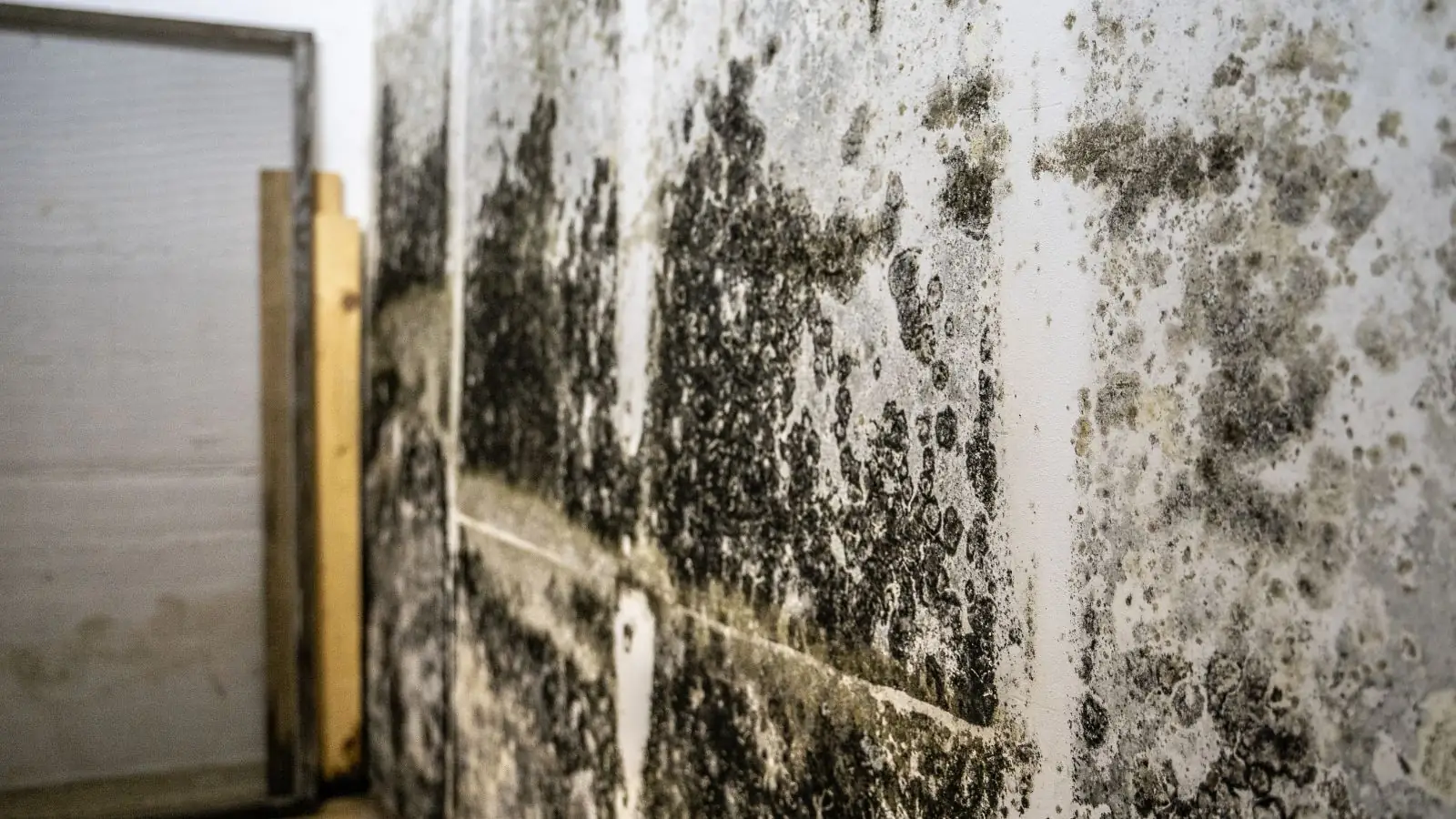
Surface area sets the baseline. A stain the size of a dinner plate is a different job from a wall discolored from floor to ceiling, even if both began with the same slow drip. More area means more labor and more of everything else.
Material matters just as much. The EPA notes that porous items like ceiling tiles and carpet may have to be thrown away if they are moldy. Concrete is easier to clean where it stands. Wood framing sits in between, and how it is handled depends on how deep the staining goes.
The visible patch rarely shows the full extent. Moisture meters and a thermal camera help a crew see how far wet material runs behind the surface. That is why a price built from a photo can change after a visit, and why a clear written scope matters more than a fast number.
Need help with this today?
Dispatch is open 24 hours a day, every day.
Water source, containment and air filtration
If the water source is still active, the job can start over once the crew leaves. A failed pipe, a clogged drain or seepage along a foundation wall has to be repaired or at least identified before remediation begins. A quote that skips this step is pricing a cleanup that may not last.
Containment is the other big line item. Crews hang plastic barriers and set up negative air, so air flows into the work zone rather than out of it. They also run air scrubbers with HEPA filtration. This keeps disturbed material from drifting upstairs, and it takes equipment and setup time, so it shows up in the price.
Demolition and disposal come next. Removed drywall and insulation are bagged, carried out and hauled away. Narrow stairs or a long carry to the truck add labor, so access is a real cost factor even though it has nothing to do with the mold itself.
Why two quotes for one basement can differ
Two quotes for the same basement can land far apart without either company being dishonest. One may include containment and air scrubbers while the other assumes you will tolerate dust. One may price demolition and disposal while the other leaves the haul-out to you.
Drying is another gap. One quote may count two days of equipment and another six, and the honest answer is that it depends. Some quotes assume the source is already fixed, and some leave the rebuild out entirely. A low number that leaves out half the work is not a lower price.
How to compare two quotes
Put the quotes side by side and ask each company the same questions. The list below works for most basement jobs.
- Does the written scope name the rooms and materials to be removed, cleaned or dried?
- Is the water source fixed, or is that assumed to be someone else's job?
- Which containment is planned: plastic barriers, negative air, HEPA air scrubbers?
- Who handles demolition, bagging and disposal, and is it included?
- How many days of drying equipment are assumed, and what happens if readings are not dry yet?
- Is clearance testing included, left out, or left to an independent party?
- Does the quote stop at demolition, or does it include the rebuild?
Also ask whether the crew works to ANSI/IICRC S520. A written scope you can read in five minutes is a good sign. A vague one is a reason to ask more questions.
Insurance, the rebuild and a smaller scope
Insurance usually covers mold only when it follows a covered sudden water loss, such as a burst pipe. Gradual leaks and neglect are often excluded, and flood damage is usually excluded unless you carry separate flood coverage. Check your policy and ask your insurer before work begins, since insurers have a contractual right to inspect.
The Washington Insurance Commissioner's guidance suggests photographing damage when it is safe and keeping small samples of materials you discard for the adjuster. Those habits also help a restoration crew write an accurate scope.
The rebuild is its own phase. Once drying is done, replacing drywall, insulation, trim and flooring falls under water damage repair, and you can price it with the same company or a different one. Decide that before demolition so the opening is left in a state the next crew can work with.
You can also keep the scope from growing. The EPA advises drying water-damaged areas within 24 to 48 hours, so act on a wet basement quickly. We serve homes in Mukilteo and nearby towns such as Everett and Lynnwood, and you can call (425) 592-3399 to talk through what you are seeing.
Mukilteo local note: Permits and contractor checks
According to the City of Mukilteo's Permit Center page, building, engineering, fire and planning permits go through an online Permit Portal, and the Planning Department answers how the rules apply to a specific property. Electrical permits are handled by Washington L&I, not the city. If your rebuild after demolition touches walls, wiring or structure, ask the city building department whether a permit applies.
City Hall is open Monday to Thursday and closed Fridays, so plan your call for early in the week. Washington requires all construction contractors to register with L&I (lni.wa.gov), so you can ask any contractor for its registration and look it up before you agree to a scope.
Frequently asked questions
Not reliably. A call can give a rough picture of what is involved, but moisture can run behind finished walls.
A visit and moisture readings turn that picture into a written scope, and scope and price are explained before work starts.
Often only when the mold follows a covered sudden water loss. Gradual leaks and neglect are commonly excluded, and flood damage usually needs separate flood coverage.
Check your policy and ask your insurer. Nobody outside the insurer can promise approval.
It may leave out containment, disposal, drying days or the rebuild. You then pay for those pieces later, or you find out the source was never addressed.
Compare scopes line by line before you compare totals.
Sometimes. It depends on the lender and the sale contract, so ask early. Independent clearance testing is separate from the company doing the remediation.
The CDC does not recommend routine mold testing, but a transaction can still ask for it.
Start with the city's Permit Center, which handles building, engineering, fire and planning permits through its online Permit Portal. The Planning Department can explain how rules apply to your property.
Electrical work is permitted through Washington L&I instead of the city.
Still have a question? Call (425) 592-3399, any hour.