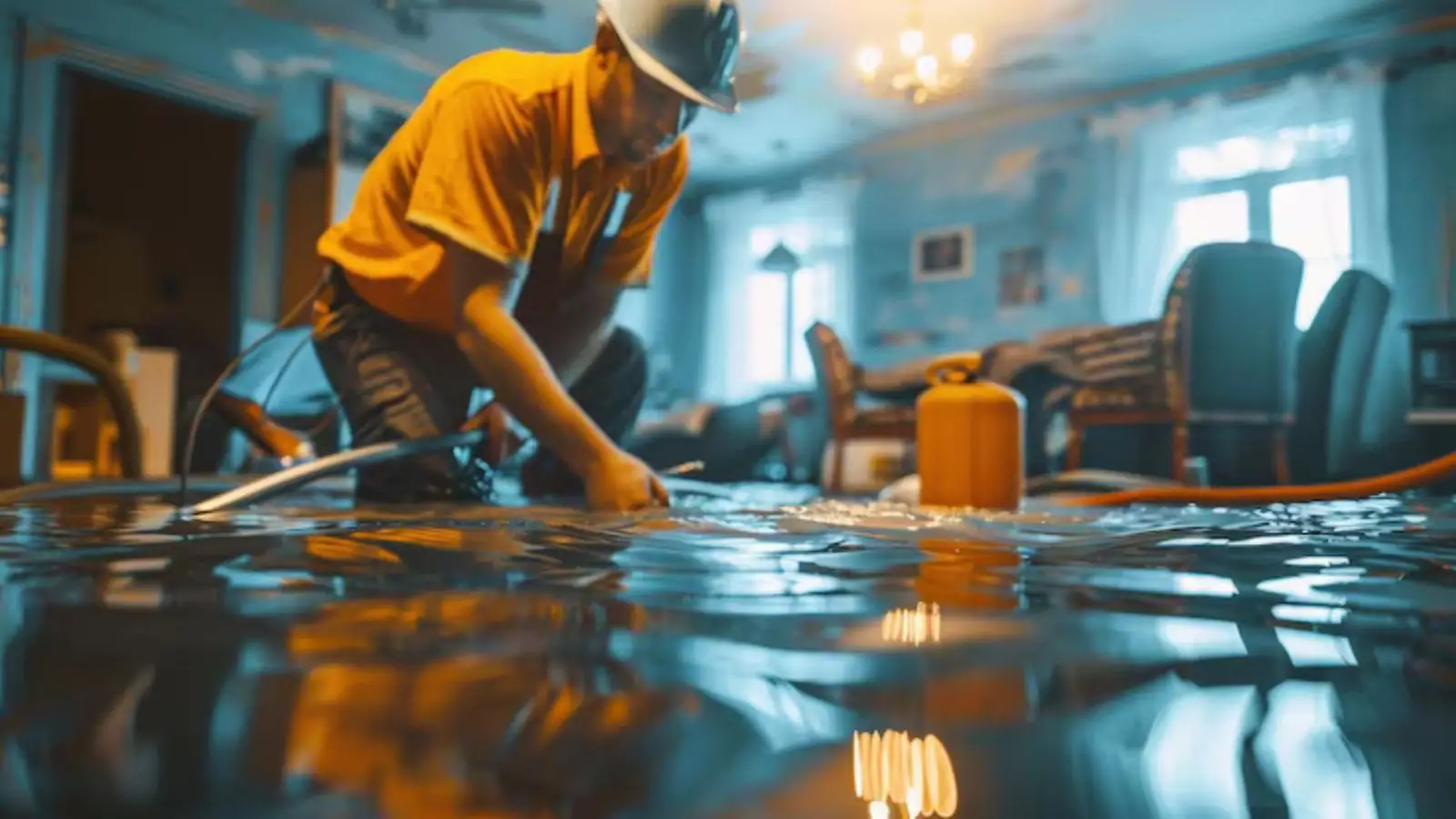
What the age of your Lynnwood home means for water damage
Lynnwood was incorporated in 1959, and the homes here span many building eras. The pipes inside your walls tell you more about your risk than the street you live on. Knowing what your home is likely made of helps you spot trouble early and describe it clearly when you call.
If your home was built before the 1960s, it may still have galvanized steel supply pipes or old cast iron drains. These corrode from the inside, so a leak can start as a slow seep inside a wall. If it dates from the late 1970s through the mid 1990s, ask about polybutylene supply lines, a gray plastic pipe that has a history of failing at fittings.
Newer homes often have PEX and braided supply hoses. They are durable, but they fail at fittings, at washing machine and toilet connections, and at water heater hookups. A single loose connection can run for hours before anyone notices.
| If your home dates from | Common material | Typical failure | What to do |
|---|---|---|---|
| Before the 1960s | Galvanized steel, cast iron drains | Pinhole leaks, slow drain backups | Shut the main valve and call for extraction and moisture mapping |
| 1960s to 1970s | Copper supply, mixed drain materials | Pinholes and joint leaks | Stop the source and check the wall cavity behind the stain |
| Late 1970s to mid 1990s | Polybutylene may be present | Fitting failures, sudden bursts | Shut the main valve and ask a plumber about replacing the lines |
| Newer construction | PEX, braided supply hoses | Loose or cracked connections | Shut the fixture valve and dry the cabinet and floor quickly |
Treat the table as a guide, not a verdict on your house. Past remodels often mix old and new pipe in one wall. A plumber can tell you what you actually have.
When water is spreading in Lynnwood
Water moves fast once it leaves a pipe. Within a day it can soak drywall, insulation and the subfloor, and it keeps traveling along framing. That is why the first hours matter more than anything you do later.
Emergency dispatch is available around the clock for Lynnwood addresses, including nights, weekends and holidays. Same-day response when available is how we describe it, because storms and road conditions on I-5 and SR 99 change what is possible. The call line is (425) 592-3399, and the person who answers will ask where the water is coming from and how far it has spread.
If water is still spreading, do this first
Stop the source
Close the fixture valve or shut the main valve at the house. If you cannot find the cause, the main valve stops everything.
Power off only if safe
Cut power to wet areas only if you can reach the panel while standing on dry ground. If water is near the panel or outlets, stay out and call the utility or 911.
Lift valuables and furniture
Move electronics, papers and small furniture to dry rooms or higher surfaces. Pull rugs off wet floors if they come up easily.
Keep people and pets out
Stay out of water that may be contaminated, especially sewage or water that came in from outside. Then call us.
Water spreading in Lynnwood?
Call the 24/7 line now.
How the response works once you call
The first step is water mitigation, which means stopping further damage. The crew confirms the source is off, checks moisture with meters and thermal cameras, and starts drying. Scope and price explained before work starts, so you know what comes next.
If water is standing in rooms, emergency water removal comes first because extraction has to start before drying can work. Air movers and dehumidifiers follow, and drying typically takes a few days, depending on materials and conditions. Wet drywall and insulation are often removed rather than dried.
Once the structure is dry, water damage cleanup clears debris and sanitizes affected areas. Then water damage repair rebuilds drywall, flooring, paint and cabinets. Ask any company whether its crews work to the ANSI/IICRC S500 standard for water damage.
Big events are different. A storm, groundwater or a sewer backup can bring contaminated water into the house, and flood damage restoration covers that work. Those jobs need protective gear and more material removal.
Water from the unit above: condos and apartments
Many Lynnwood residents live in condos and apartments, and water loss there involves other people. A leak from the unit above can reach your ceiling, walls and floors before you see a drip. The source may be outside your control, but your response still matters.
Notify your building manager, landlord or HOA right away so someone can shut off the supply to the leaking unit. Tell your own insurer too, whether you own or rent. Ask which policy covers which part of the loss, since shared walls and building systems are usually handled differently from your belongings.
Document everything while it is fresh. Take photos and video of the damage, note the time you found it, and keep small samples of damaged materials you discard. Do not wait for the neighbor's repair to start your own drying, because moisture in a shared wall keeps spreading.
Local conditions that shape water damage here
Lynnwood sits on a plateau roughly 300 to 600 feet above Puget Sound, at the I-5 and I-405 junction with SR 99 running through town. Hillside lots and slopes can send runoff toward foundations and lower levels. After heavy rain, check basements, crawl spaces and window wells for seepage.
Scriber Lake and Scriber Creek, Lund's Gulch and Hall Lake are part of the local drainage picture, and Lake Serene sits nearby. If your home is close to a creek or low ground, check the FEMA flood map for your address. Flood damage is usually excluded from standard policies and needs separate flood coverage.
Commercial areas like the Lynnwood Triangle retail corridor and Alderwood Mall, which opened in 1979, add large roofs and paved lots that shed a lot of water in storms. Business owners should know where their roof drains and shut-offs are before an emergency, not during one.
Residential pockets such as Alderwood Manor and Picnic Point-North Lynnwood have their own mix of lots and homes. Whatever the neighborhood, check which water district serves your address. Alderwood Water and Wastewater District serves parts of the area, and the city of Lynnwood handles its own sewer, so the right number to call depends on the line.
The city's website has a page for reporting flooding, a water leak or a sewer issue, which is worth using if the problem is in the street or a public line. Permits for rebuilding work go through Development & Business Services at the city, so ask the city what your repair needs. If mold appears after a leak, see our mold remediation page.
What affects the cost of a Lynnwood water loss
- How much water and how long it sat: a fast shut-off limits the area that needs drying.
- Water category: clean supply water costs less to handle than gray water or sewage.
- Materials affected: carpet, hardwood, drywall and insulation each dry or fail differently.
- Size of the affected area and the number of rooms or floors involved.
- Equipment and days of drying: it depends on conditions and how deep the moisture went.
On insurance, sudden and accidental water damage is often covered, while gradual leaks and neglect often are not. Check your policy or ask your insurer before you assume either way. We do not promise approval or payout, and we are licensed and insured to do the work itself.
Where we serve around Lynnwood
We are based in Mukilteo, the next city north, and we cover Lynnwood addresses for water damage repair, water mitigation, cleanup, emergency removal and flood work. Serving Mukilteo and nearby towns means we also work in Everett to the north and Edmonds to the west. Browse every service we offer or see the full service area.
Not sure whether your loss needs a crew or a plumber? Call (425) 592-3399 and describe what you see. Our dispatcher will tell you honestly what the next step is.
Frequently asked questions
Yes. Emergency dispatch runs around the clock for Lynnwood addresses, including nights and weekends. We offer same-day response when available, and we do not promise a specific arrival time because traffic and storms vary.
While you wait, shut off the water source and keep people out of any water that may be contaminated.
Yes, we cover Lynnwood's three ZIP codes: 98036, 98037 and 98087. Together they span the city from the Alderwood Mall area and the I-5 and I-405 junction to the SR 99 corridor and Alderwood Manor.
If you are unsure whether your address is in the city, call and we will confirm it with you.
Age is a clue but not proof, since many homes have been remodeled. Homes from before the 1960s may have galvanized steel, and those from the late 1970s through the mid 1990s may have polybutylene. A plumber can identify what is behind your walls.
Notify your building manager, landlord or HOA so the supply to the leaking unit can be shut off. Photograph the damage, tell your insurer, and ask which policy covers which part of the loss.
Start drying promptly even if the neighbor's repair is pending, because moisture in shared walls keeps spreading.
Check which water district serves your address. Alderwood Water and Wastewater District covers part of the area, and the city of Lynnwood handles its own sewer. The city website also has a page for reporting flooding, a water leak or a sewer issue.
Sudden and accidental water damage is often covered, while gradual leaks often are not. Flood damage is usually excluded and needs separate flood coverage. Check your policy or ask your insurer, because we cannot promise approval or payout.
Still have a question? Call (425) 592-3399, any hour.