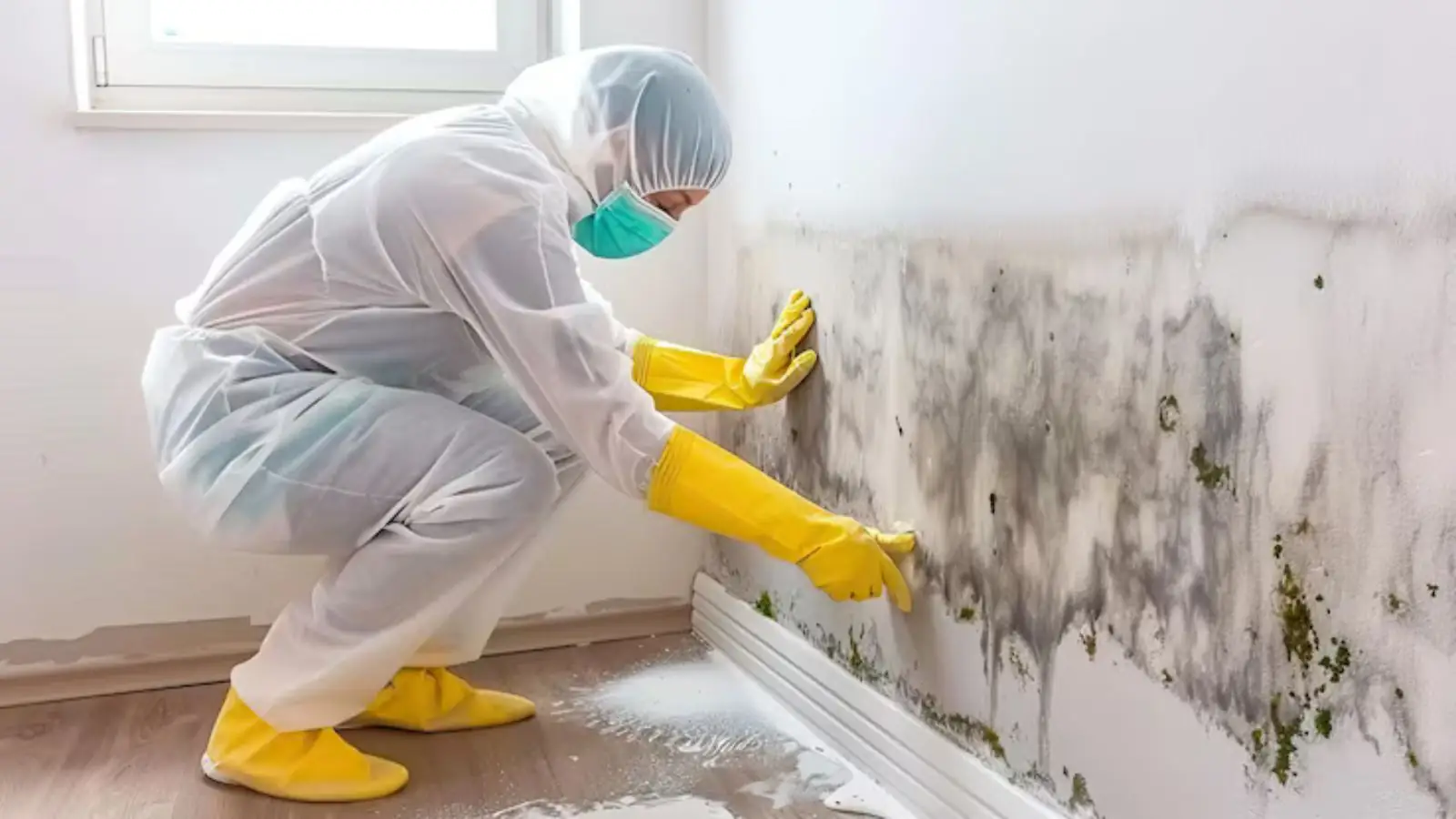
A dark spot on the ceiling, a musty closet, a stain that keeps coming back
Most people do not start with the words mold remediation. They notice a fuzzy patch in a shower corner, a smell in a closet, or a ceiling stain under a bathroom. Mold remediation is the trade name for finding why it is there, containing it, and taking it out.
Mold needs moisture. A leak under a sink, a roof drip, an air conditioner condensate line or a long-running humid room usually sits behind it. Until the water source is fixed, cleaning only buys time. Questions about health belong with a physician, and this page sticks to the building.
What mold remediation actually involves
The published industry standard for this work is ANSI/IICRC S520. You can ask any company whether its crews work to S520. A job generally follows these steps.
- Find and stop the moisture source, and dry the area.
- Inspect the extent of growth, including behind finishes where a leak ran.
- Contain the work area with plastic sheeting and run air filtration with HEPA filters.
- Remove mold-damaged porous materials such as drywall, insulation or carpet, and clean salvageable surfaces.
- Dry and verify, then hand the area to repair.
Containment matters because disturbing mold without it can spread spores to other rooms. That is the main reason larger jobs are not a weekend project.
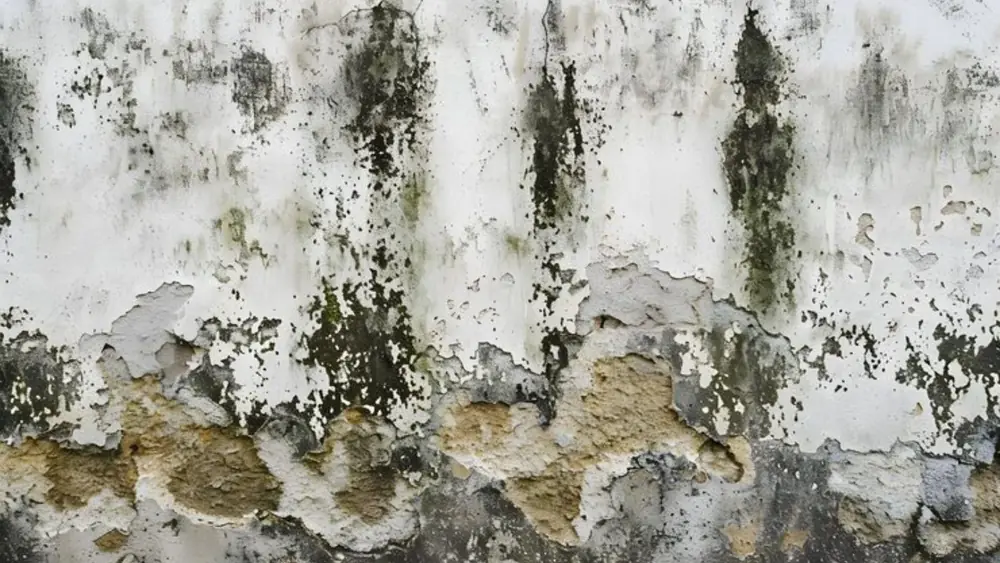
Small spots versus a job for a crew
The EPA says mold covering less than about 10 square feet, roughly a 3-foot by 3-foot patch, is in most cases something a homeowner can handle. The EPA suggests detergent and water on hard surfaces, drying completely, and gloves, goggles and an N-95 respirator.
Call a professional when growth covers more than 10 square feet, when there was a lot of water damage, or when the water was sewage or other contaminated water. The EPA does not recommend bleach as a routine cleanup method, and says never to mix bleach with ammonia.
| Situation | Usual call |
|---|---|
| Small spot on a hard surface, source fixed | Homeowner cleanup per EPA guidance |
| More than about 10 square feet | Professional remediation |
| Mold inside walls, ceilings or insulation | Professional, with containment |
| Sewage or floodwater involved | Professional with flood damage restoration |
| Mold keeps returning | Find the moisture source first |
Found mold and want a plan?
Call the dispatch line to talk through the situation.
Mold after water damage
The best mold prevention is fast drying. The EPA advises drying water-damaged areas and items within 24 to 48 hours. That is where water mitigation fits: a wall dried quickly after a leak often never needs remediation.
If a leak sat for days, check behind baseboards, under flooring and inside the wall below the leak. Crews use moisture meters and a thermal camera to find hidden wet spots. If you are repairing a leak that ran for weeks, expect that opening the wall may reveal growth.
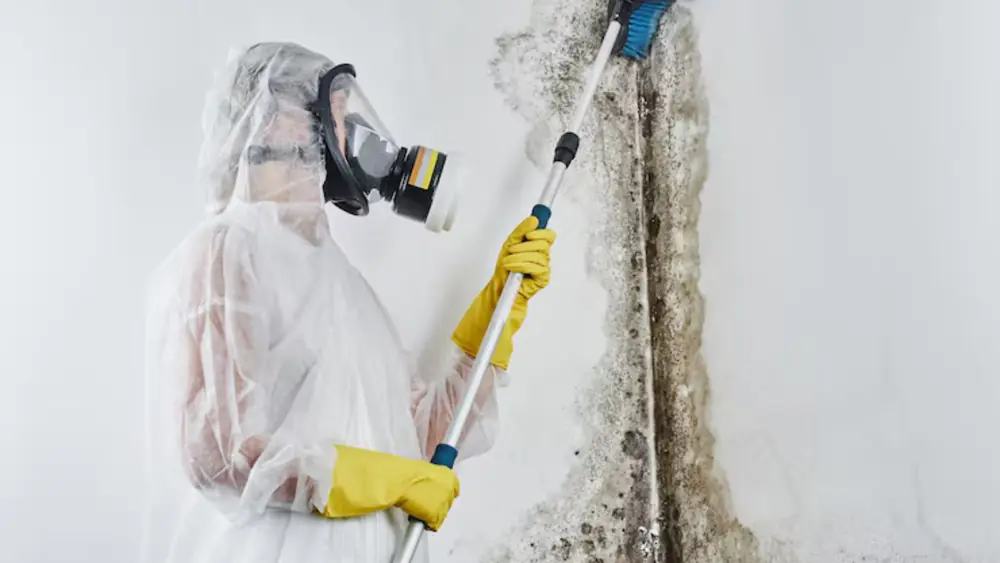
Mold removal and black mold cleanup
Mold comes in many colors, and color alone does not tell you what is growing. The CDC says you do not need to know the type of mold, and the same removal approach applies. A dark patch might be mold, soot, dirt or a water stain.
For growth that is more than a small spot, remediation removes the affected materials and cleans the surfaces that stay. Porous materials like ceiling tiles, insulation and carpet are often discarded. Wood framing can usually be cleaned, dried and checked.
Do not paint over mold, and do not run a fan that blows the area into other rooms. Fix the source of moisture first, or the growth will return.
Mold testing and inspection
The CDC does not recommend routine mold testing, and the EPA says sampling is usually unnecessary when mold is visible. The EPA also notes that no federal limits exist for mold spores, so a lab number cannot show that a building meets a standard.
Testing still has a place. An independent clearance test after remediation is sometimes requested by a buyer, a lender or a landlord. If you need that, ask for an independent tester who does not do the remediation, so the same company is not grading its own work.
Mold clearance for a home sale or loan
Buyers and lenders sometimes ask for proof that mold was removed. The paperwork you need depends on the lender and the contract, so ask them what they accept. Remediation records and moisture logs help, and dispatch can explain what documentation is available for your job.
What affects the cost of mold remediation
Dispatch explains scope and price before work starts. The same few factors drive almost every mold job.
- Size of the affected area and how deep the growth goes.
- Materials involved, since drywall and insulation come out and concrete is cleaned.
- Containment and air filtration needs.
- Drying days and equipment to dry the area afterward.
- Rebuild afterward, which is a separate step.
Insurance often covers mold only when it follows a covered sudden water loss, and often does not when it came from long-term leaks or humidity. Check your policy or ask your insurer. Want your real number? Call (425) 592-3399.
Mold remediation around Mukilteo
Rainy winters keep indoor humidity high in Puget Sound homes, so bathrooms, closets and crawl spaces are typical trouble spots. Use bathroom fans, fix leaks promptly and keep air moving. Dispatch covers Mukilteo (ZIP 98275) and the neighboring cities of Everett (98201, 98203, 98204 and 98208), Lynnwood (98036, 98037 and 98087) and Edmonds (98020 and 98026).
Crews also work in Everett, Lynnwood and Edmonds. After remediation, water damage repair rebuilds the finishes that were removed. Ask whether your state licenses mold work and whether any contractor you hire is registered with Washington L&I.
Safety steps before mold work starts
- Stop the water source first, because growth cannot be cleaned for good while the area stays wet.
- Do not disturb a large patch with a dry brush or a fan, since that can spread spores to other rooms.
- Keep children and pets out of the affected room until the area is assessed.
- Wear gloves, goggles and an N-95 respirator for any small cleanup, as the EPA advises.
Call (425) 592-3399 if you are unsure whether the spot is small enough to handle yourself.
Frequently asked questions
Often not. The EPA says sampling is usually unnecessary when mold is visible, and the CDC does not recommend routine testing. Independent clearance testing afterward may be requested for a sale or loan.
The EPA says areas under about 10 square feet can usually be handled by a homeowner with gloves, goggles and an N-95 respirator. Larger areas, contaminated water or mold inside walls call for a professional.
The EPA does not recommend bleach as a routine cleanup method. Detergent and water on hard surfaces is the EPA baseline, and bleach should never be mixed with ammonia.
Because moisture is still there. Check the fan vents outside, fix leaks, and dry the area after showers. Cleaning without fixing moisture only delays regrowth.
Ask dispatch what documentation is available for your job. Independent clearance testing is normally done by a separate tester, and lenders can tell you what they accept.
Usually not. Growth inside a wall is found with moisture meters and a thermal camera, and removal means opening the wall so the affected material comes out.
Sometimes, when the mold follows a covered sudden water loss. Policies often limit or exclude mold from long-term leaks. Check your policy.
Still have a question? Call (425) 592-3399, any hour.