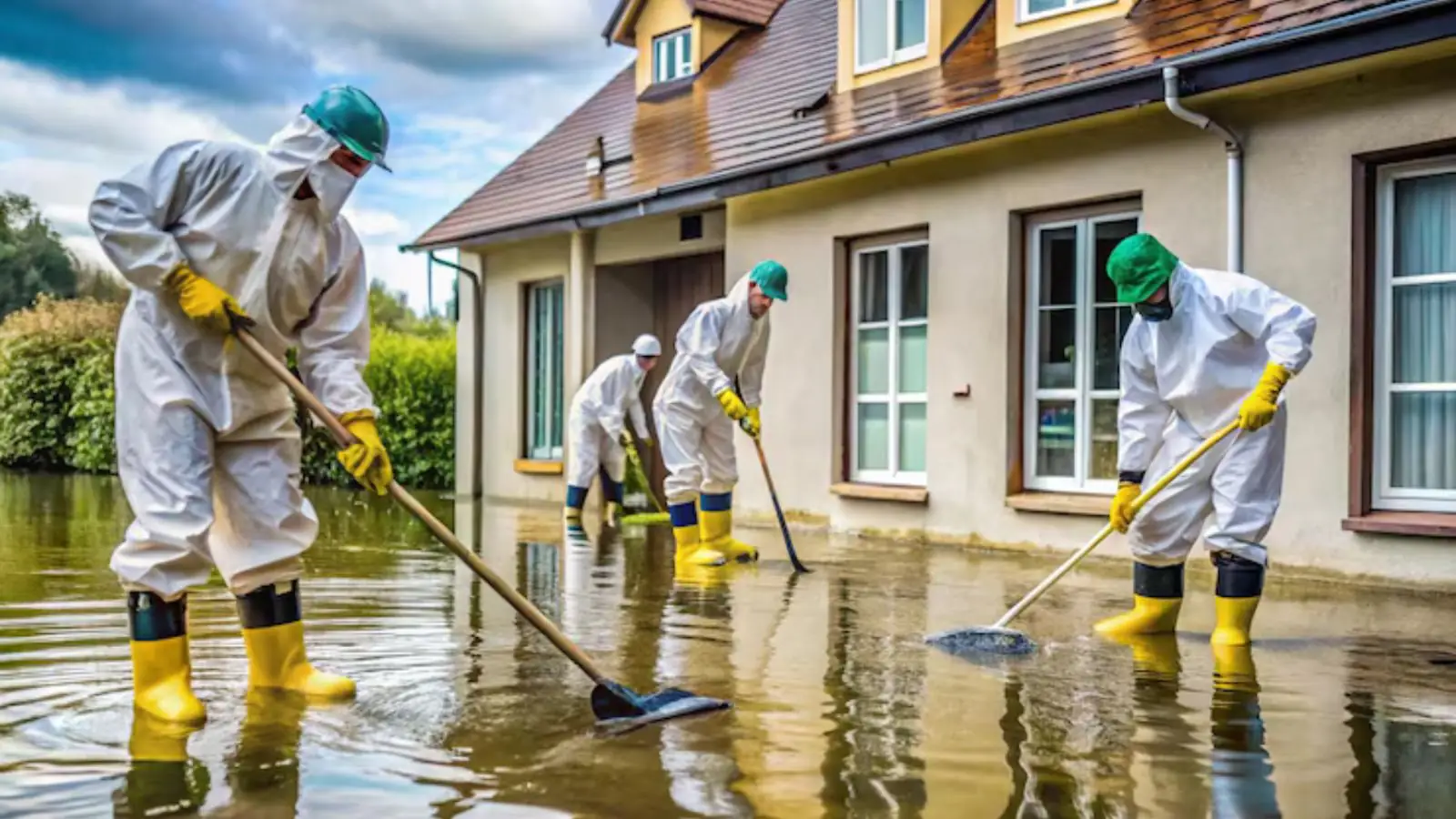
When flood water or sewage is an emergency
Flood damage is different from a broken pipe. Water that enters from outside or backs up from a drain often carries soil, bacteria and debris, so it is handled as contaminated. Dispatch is open 24/7 for flood calls, including storms that hit at night.
While you wait, keep everyone out of the water. Do not use household vacuums on it, and do not walk through it near outlets. Shut off power to the affected area only if you can reach the panel while dry, and call 911 or your utility for any electrical or gas risk first.
Sewage and floodwater are not a do-it-yourself job
The EPA advises calling a professional with experience in contaminated water when the water came from sewage or other contaminated sources. Gloves alone are not enough, and porous materials that touched this water are usually removed.
Flood damage cleanup across the Mukilteo area
Mukilteo sits on Possession Sound, with Port Gardner Bay to the north, and the city has mild, rainy winters. The City's stormwater rules are in Mukilteo Municipal Code Chapter 13.12 and the 2024 Stormwater Management Manual,.
The city also publishes drainage summaries for areas such as the Hulk Creek watershed, which drains to Puget Sound. That summary does not mention flooding, so check the FEMA flood map for your address to see whether your property is in a mapped flood area.
If water is coming from the street side of your meter, the water district serving your address is the right call: Mukilteo Water and Wastewater District for north and central Mukilteo, or Alderwood Water and Wastewater District for the south Harbour Pointe area. Your own restoration call covers the inside of the building.
How flood restoration works
Flood work follows the ANSI/IICRC S500 standard for water damage restoration. You can ask any company whether its crews work to S500. The steps are close to other water jobs, with more removal and sanitizing.
- Assess the water category and the extent of the flood, including crawl spaces and wall cavities.
- Extract water and remove contaminated carpet, pad, insulation and wet drywall where needed.
- Clean and sanitize hard surfaces and framing that stay.
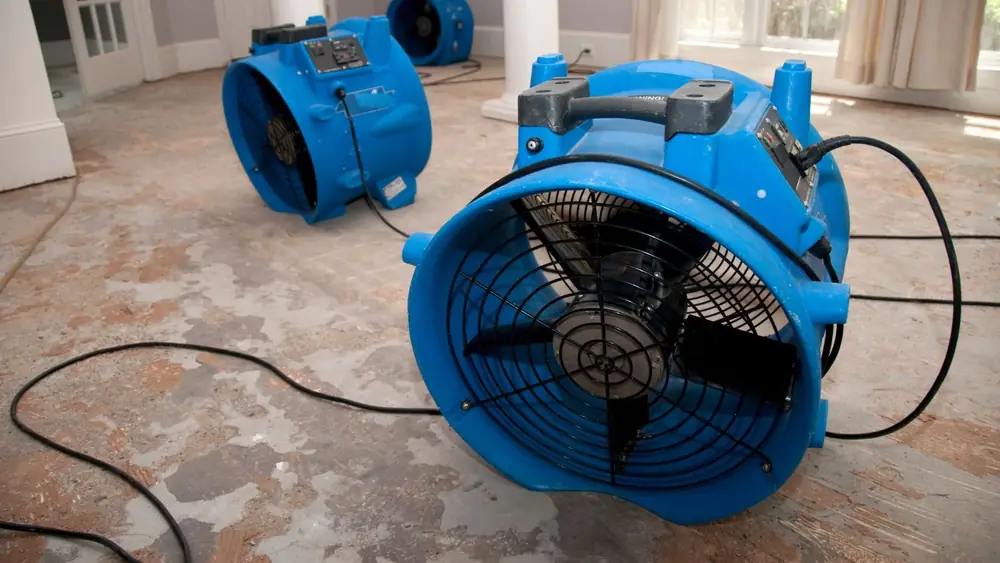
- Dry the structure with air movers and dehumidifiers, with daily moisture readings.
- Document the loss, then move on to repair.
| Material | Clean water | Floodwater or sewage |
|---|---|---|
| Carpet and pad | Often dried or pad replaced | Usually removed |
| Drywall | May dry in place if caught early | Usually cut out above the water line |
| Hardwood | Dried if caught quickly | Often removed after prolonged contact |
| Wood framing | Dried and monitored | Cleaned, sanitized and dried |
| Insulation | Often replaced if wet | Removed |
Floodwater inside the house?
Call the 24/7 line and describe what you see.
Basement flooding cleanup
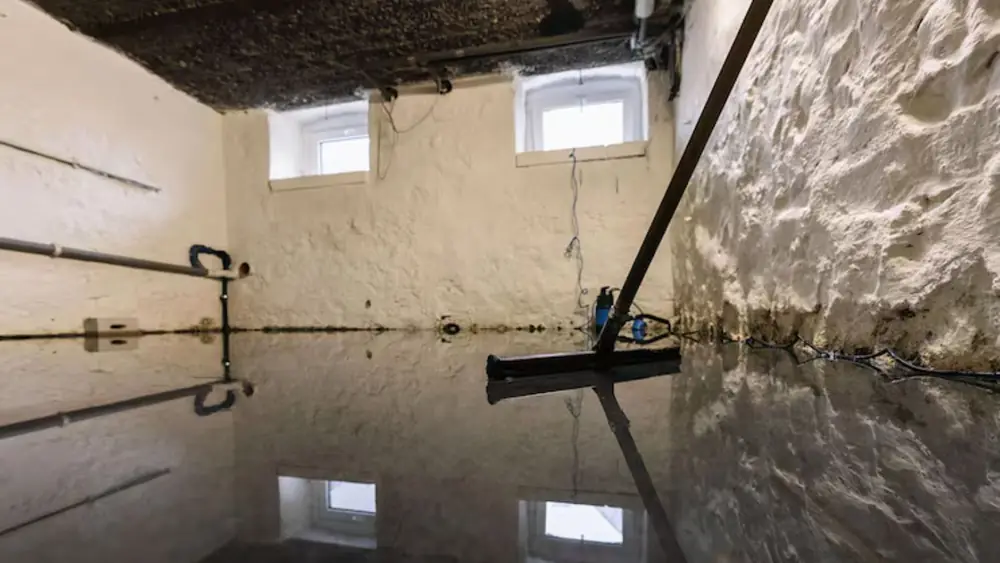
If your home has a basement, flood water settles there first. Finished basements add carpet, drywall and storage that hold water, and concrete floors stay damp long after standing water is gone. Crews extract the water, remove materials that cannot be cleaned, and set drying equipment to bring the slab and walls down to normal readings.
Restoration is not waterproofing. If groundwater keeps coming in, ask a waterproofing or drainage contractor to address the cause. Restoration handles the damage, and a different trade stops the water from coming back. Not every home here has a basement, so describe your layout when you call.
Sewage backup cleanup
A sewage backup is Category 3 water. It can come from a clogged main, a failed sewer line or a surcharged public sewer. Stay out of the area and do not run water, since more flushing can add to the backup.
Crews remove porous materials the sewage touched, clean and sanitize surfaces, and dry the structure. Call your sewer provider if the backup may come from the public line, since that changes who is responsible. Document everything for your insurer, since coverage for sewer backup often depends on a policy endorsement. Check your policy.
What affects the cost of flood restoration
Dispatch explains scope and price before work starts. These factors drive it.
- Water category, since contaminated water adds removal and sanitizing.
- Affected square footage and how high the water rose on walls.
- Materials that must be removed and disposed of.
- Drying days and equipment count.
- Rebuild scope once the structure is dry.
Flood damage is usually excluded from standard homeowners and renters policies and needs separate flood coverage. The Washington Insurance Commissioner's flood guidance advises photographing the damage when it is safe, keeping small samples of discarded materials for the adjuster, and asking your insurer when it can inspect. Ask your insurer what applies to you.
Where we respond for flood calls
Dispatch covers Mukilteo (ZIP 98275) and the neighboring cities of Everett (98201, 98203, 98204 and 98208), Lynnwood (98036, 98037 and 98087) and Edmonds (98020 and 98026). That includes Old Town and Harbour Pointe in Mukilteo, and the neighboring cities of Everett, Lynnwood and Edmonds.
After the water is out, the next step is usually water mitigation to dry the structure and water damage cleanup to clear what the water left behind.
Frequently asked questions
Yes. Dispatch answers 24/7, including storm nights and holidays. Same-day response is available when crews are free, and no arrival time is promised.
Usually not. Flood is commonly excluded and needs separate flood coverage, while some policies add sewer backup as an endorsement. Check your policy or ask your insurer.
Yes. Sewage is Category 3 water, so affected porous materials are removed and surfaces are sanitized. Stay out of the area and call.
Check the FEMA flood map for your address. The City of Mukilteo's Planning Department can also answer how rules apply to a specific property.
Cleanup and removal may take days, and drying typically takes a few days more, depending on materials and conditions. Rebuild time depends on what had to be removed.
For small clean-water spills, yes. For floodwater, sewage or large areas, the EPA advises calling a professional experienced with contaminated water.
Still have a question? Call (425) 592-3399, any hour.