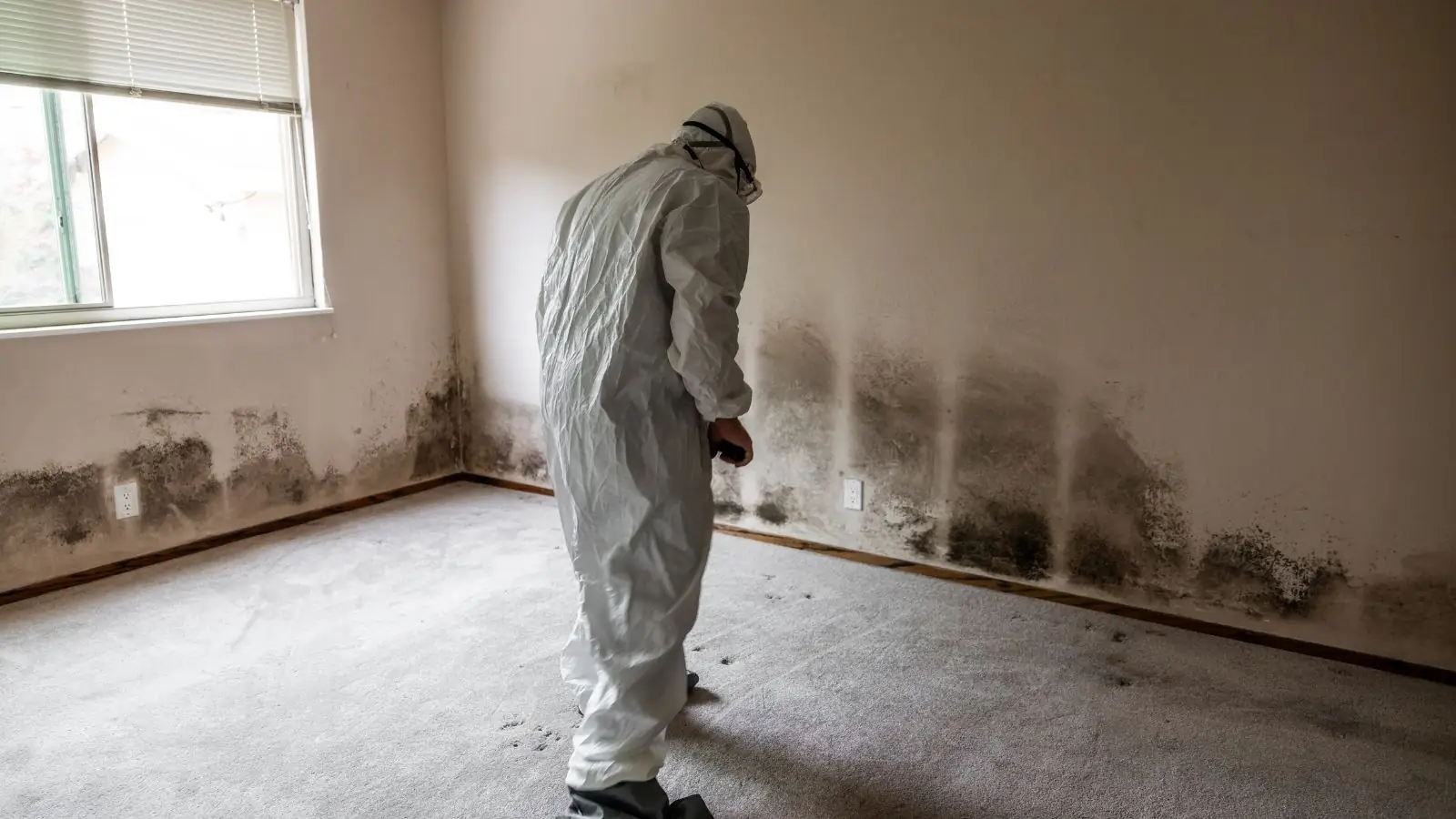
The 10 square foot line
Mold under about 10 square feet, roughly a 3 foot by 3 foot patch, is usually a do-it-yourself job, according to the EPA. Call a professional when it covers more than that, when a lot of water got in, or when the water was sewage or otherwise contaminated. Either way, fix the moisture source first, because mold needs moisture to grow.
This post covers the gear, the steps for a small patch, what a professional crew does, and how clearance testing fits in. Health questions about mold exposure belong to a physician.
DIY or pro: a decision table
| Situation | DIY or pro | Why |
|---|---|---|
| Small patch under 10 square feet on a hard surface, and the leak is fixed | DIY is usually reasonable | This matches the EPA guideline, with gloves, goggles and an N-95 respirator. |
| Patch larger than 10 square feet | Pro | Larger areas need containment and more disposal. |
| Carpet or drywall soaked and moldy | Pro is more likely | Porous items may have to be thrown away, and the wet area is often bigger than it looks. |
| Sewage or contaminated water | Pro, and stay out until it is handled | Contaminated water calls for protective gear and careful disposal. |
| A lot of water, such as a burst pipe or flooded floor | Pro | Hidden wet material needs drying equipment and moisture mapping. |
| Mold returns to the same spot | Pro to find the moisture | The source is probably still active. |
| A lender or buyer wants documentation | Pro plus an independent tester | Clearance testing is a separate service from remediation. |
| Someone at home has health concerns | Ask a physician first | Health questions are for a doctor, not a contractor. |
If you go the DIY route
The EPA recommends gloves, goggles and an N-95 respirator for a small cleanup. Stop the water first, then dry the area. The EPA advises drying water-damaged areas and items within 24 to 48 hours.
- Close the basement door and keep air from blowing across the moldy surface toward other rooms.
- Bag porous items such as carpet, ceiling tiles or soaked cardboard, since they may have to be thrown away.
- Scrub hard surfaces with detergent and water, then wipe them dry.
- Dry the whole area completely and keep watching it for new dampness.
The EPA does not recommend bleach as a routine cleanup method. Never mix bleach with ammonia, since the mix can release dangerous gas. Do not paint over the spot, because paint hides mold and does nothing about the moisture.
Stop and call a pro if the patch turns out bigger once you start scrubbing, or if the wall behind it is soft or wet. Surprises like that are common, since moisture hides behind paneling and under flooring. It is better to stop early than to spread material around a room you are trying to clean.
Need help with this today?
Dispatch is open 24 hours a day, every day.
What a professional job looks like
A crew working to the published ANSI/IICRC S520 standard follows a set order. If the basement is still wet, water mitigation comes first, so the moisture is under control before mold work starts. The steps below are how a typical mold remediation job is laid out.
- Moisture mapping with meters and a thermal camera to find the source and how far it spread.
- Containment with plastic barriers around the work zone.
- Negative air, so air moves into the work zone, with HEPA air scrubbers running.
- Removal of porous materials, bagged before they leave the containment.
- HEPA vacuuming and cleaning of the remaining surfaces.
- Drying with air movers and dehumidifiers until readings come down.
- Verification, which can be a visual check, moisture readings and sometimes testing.
A pro job also leaves a paper trail. Ask for the moisture readings taken at the start and at the end, along with a list of what was removed. Those notes help if an insurer, lender or buyer asks questions later.
What to expect, in order
The stages below show the order of a professional job. Timing depends on the size of the area, the materials and the conditions, so no honest company promises exact days.
Visit and scope
A walkthrough, moisture readings and a written scope. Scope and price are explained before work starts.
Setup
Barriers go up, air scrubbers start, and the work zone is sealed off from the rest of the house.
Removal and cleaning
Porous materials come out, and the remaining surfaces are vacuumed and cleaned.
Drying and sign-off
Equipment runs typically a few days, depending on materials and conditions, then the crew verifies the result.
Clearance testing for a lender or buyer
If a lender or buyer wants proof the work is done, the testing is usually done by an independent party, not the remediation company. That separation matters, because the company that did the work should not be the only one grading it. Ask your lender or the buyer's agent what they require before you schedule anything.
The CDC does not recommend routine mold testing, and the EPA says sampling is usually unnecessary when mold is visible. A sale can still call for it, so treat it as a paperwork question rather than a cleanup question. If you already have a deadline from a lender or a closing date, mention it on your first call so the crew can plan the work around it.
Mistakes that make it worse
Four things not to do
Do not paint over mold. Paint hides the spot and leaves the moisture in place.
Do not run a fan across moldy surfaces or open the area to other rooms. Moving air carries material into places that were clean.
Do not mix bleach with ammonia or other cleaning products. The fumes can be dangerous.
Do not wade into water that touches outlets, a panel or sewage. Call the utility or 911 about electrical or gas risk before calling the restoration line.
If your basement is past the 10 square foot line, we serve Mukilteo and nearby towns, including Edmonds and Everett. You can call (425) 592-3399 to describe what you see.
Mukilteo local note: Wet winters and below-grade rooms
According to City of Mukilteo community information, the climate is mild with rainy winters and dry summers. If your home has a basement or crawl space, a below-grade room may see groundwater seepage during long wet spells. Check the walls and floor edges for dampness during the rainy season, and dry anything damp within 24 to 48 hours.
The City of Mukilteo's utilities page says Mukilteo Water and Wastewater District serves north and central Mukilteo, while Alderwood Water and Wastewater District serves the south Harbour Pointe area. If a wet spot might come from a utility line, ask your water utility. Snohomish County PUD is the electric utility, so call it or 911 if water is near wiring.
Frequently asked questions
The EPA says mold under about 10 square feet is usually a do-it-yourself job with gloves, goggles and an N-95 respirator. The moisture source must be fixed first.
If anyone in the home has health concerns, ask a physician before you start.
No. The CDC says you do not need to know the type of mold, and it does not recommend routine mold testing. If mold is visible, the EPA says sampling is usually unnecessary.
The EPA does not recommend bleach as a routine cleanup method. Never mix it with ammonia.
Dry the area and remove moldy porous material, and use detergent and water on hard surfaces.
An independent tester, typically separate from the remediation company. Ask the lender or buyer what they require, and arrange the testing yourself or through your agent.
Stay out and treat it as contaminated. The EPA says to call a professional when the water was sewage. Call the utility or 911 first if there is any electrical or gas risk.
Find where the water enters: gutters and downspouts, grading near the wall, or seepage through the foundation. Dry the area within 24 to 48 hours of each wet spell.
If the fix involves regrading, ask the city building department what applies at your address.
Still have a question? Call (425) 592-3399, any hour.