Start with the source and a safety check
If you find standing water or sagging, wet insulation in your crawl space, take three steps in order. Make sure it is safe to look, find and stop the water source, then get the water out and dry the framing. Deep water or water near wiring means you stay out and call the utility or 911 about the electrical risk before you call a restoration line.
Wet joists and subfloor hold moisture for a long time because the space under a house gets little air. That is why a crawl space leak can go unnoticed for weeks and then show up as problems upstairs.
Find the source
The cleanup depends on where the water came from. A clean supply line break is handled differently from groundwater or a drain problem. The table gives the usual clues and a sensible first move for each.
| Source | Clue | First move |
|---|---|---|
| Supply line break | Clear water, a water meter that keeps moving with every fixture off | Shut off the main valve, then call a plumber and a water removal crew. |
| Irrigation or sprinkler line | Wet ground in one zone, worse after the system runs | Turn off the irrigation system and its supply valve. |
| Downspout and grading | Water pools along one side of the foundation after rain | Direct the downspout away from the house and check the slope of the soil. |
| Groundwater in the wet season | Water appears after long rain with no pipe involved | Document it with photos, pump it out and ask a pro about drainage. |
| HVAC condensate | Drips near the air handler or a wet spot under the furnace | Check the condensate line and turn the unit off if it is overflowing. |
| Sewer or drain line | Foul smell, gray or dark water | Stay out, treat it as contaminated and call your sewer utility and a pro. |
Safety before you open the hatch
Stay out if
Stay out if the water is deep, if it touches wiring, outlets or electrical parts of the heating system, or if you smell sewage or gas.
If you can reach the electrical panel while standing on a dry floor, cut power to the affected circuits. If you cannot, call the electric utility or 911 before the restoration line.
A crawl space is a confined space. It is low, dark and often has one way out, so tell someone before you go in and never go alone. Wear gloves, boots and a respirator, and bring a light you do not have to hold.
If you run a pump from a portable generator, keep the generator at least 20 feet from the building, as the Washington Insurance Commissioner advises.
Need help with this today?
Dispatch is open 24 hours a day, every day.
Getting the water out
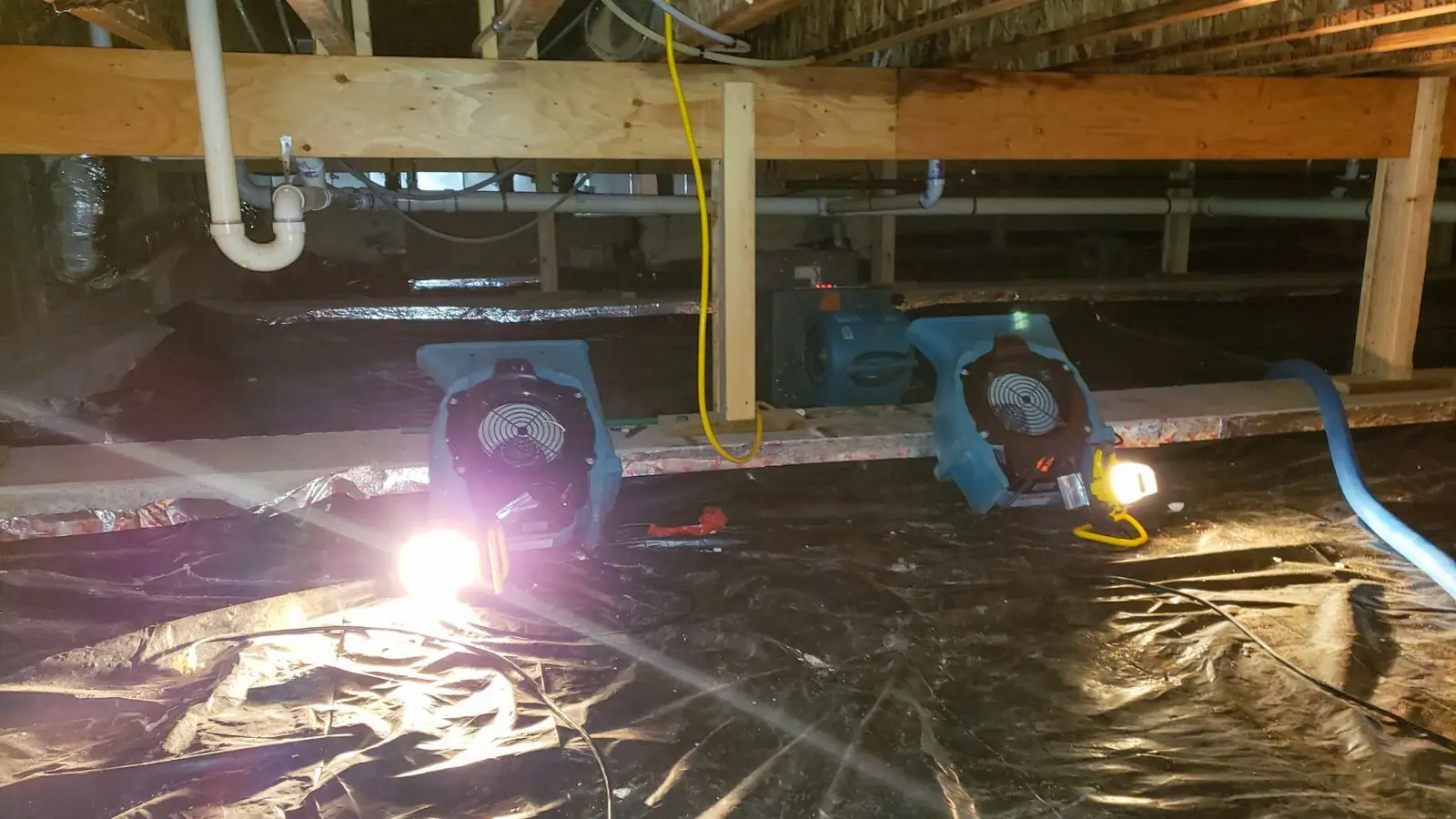
Crews pull standing water out with a submersible pump and a hose that discharges well away from the foundation, then finish with extraction units for the damp soil and low spots. Speed matters here, so emergency water removal is the first call when the water is deep and still rising.
The water category affects the plan. A clean supply line is Category 1, and rising groundwater or floodwater is treated as Category 3 under the published ANSI/IICRC S500 standard. For storm and groundwater events, see our flood damage restoration page.
Wet insulation, joists and subfloor
Insulation that stayed wet is often removed. It holds water against the underside of the floor and tends to sag, which keeps the wood wet longer. Whether it can be saved depends on the type and how long it was wet.
Wet joists and subfloor are usually dried in place. Crews check the wood with moisture meters and a thermal camera, then set air movers and dehumidifiers. Drying typically takes a few days, depending on materials and conditions.
If wet materials sat for a long time before anyone acted, mold can start. We treat that as a second phase, handled under mold remediation according to ANSI/IICRC S520, and only after the moisture is under control.
Vapor barrier in plain words
A vapor barrier is a sheet of heavy plastic laid over the soil in a crawl space. Bare soil gives off moisture, and that moisture can rise into the air and the wood framing. The sheet slows that movement.
It does not fix a leaking pipe or standing groundwater, so think of it as a question for a contractor, not a promise. Ask whether your crawl space has one, whether it covers the whole floor, whether the seams overlap and whether it is in good shape after the cleanup.
Once the area is dry, the repair list is usually short: new insulation, a look at the supply lines and fittings, and a fix for whatever let the water in. Ask the crew to note which materials were removed and what the readings showed at the end. Those notes help if your insurer asks questions later.
Why it shows up upstairs
Crawl space moisture often reaches you as cold floors or a musty smell. Wet insulation does a poor job of holding heat, and damp wood and soil give off an odor. Air from below moves up through gaps around pipes, ducts and floor edges, so the smell travels with it.
Other signs include floors that cup or feel soft, doors that stick and higher humidity inside. These can have other causes, so a look under the house confirms what is going on. We serve Mukilteo and nearby towns, including Lynnwood and Edmonds, and you can call (425) 592-3399 to describe what you found.
Mukilteo local note: Flood maps, permits and stormwater
Check the FEMA flood map for your address to see whether your home sits in a mapped flood zone. Flood damage is usually excluded from standard policies, so ask your insurer about separate flood coverage. Photograph the water and keep small samples of damaged materials you throw away, as the Washington Insurance Commissioner advises.
According to the City of Mukilteo's Permit Center page, engineering covers clearing, grading, right-of-way and stormwater, and the city lists stormwater rules in Mukilteo Municipal Code Chapter 13.12. If your fix involves moving soil or redirecting a downspout, ask the Permit Center before you start.
The city's Hulk Creek summary describes a watershed of about 375 acres, 44 percent of it inside city limits, mostly residential, draining to Puget Sound with 10 stormwater facilities. The summary does not mention flooding. Ask the city whether your address drains toward it before you send runoff anywhere new.
Frequently asked questions
Not if the water is deep or near wiring, outlets or electrical parts of the heating system. Stay out and call the utility or 911 about the electrical risk first.
A crawl space is also tight, so never go in alone.
Typically a few days, depending on the materials and conditions. Wet joists, subfloor and insulation all affect the time.
A crew checks readings with moisture meters before calling it dry.
Sudden and accidental water damage, like a burst pipe, is often covered. Gradual leaks and neglect often are not, and flood damage usually needs separate flood coverage.
Check your policy and ask your insurer before work starts.
Often, yes. Insulation that stayed wet is commonly removed because it holds water against the floor. It depends on the type and how long it was wet.
It slows moisture rising from the soil. It does not stop a pipe leak or groundwater, so ask a contractor what it can and cannot do for your space.
Ask the City of Mukilteo's Permit Center. Its engineering group covers grading and stormwater, and the Planning Department answers how rules apply to a specific property.
City Hall is open Monday to Thursday and closed Fridays.
Still have a question? Call (425) 592-3399, any hour.