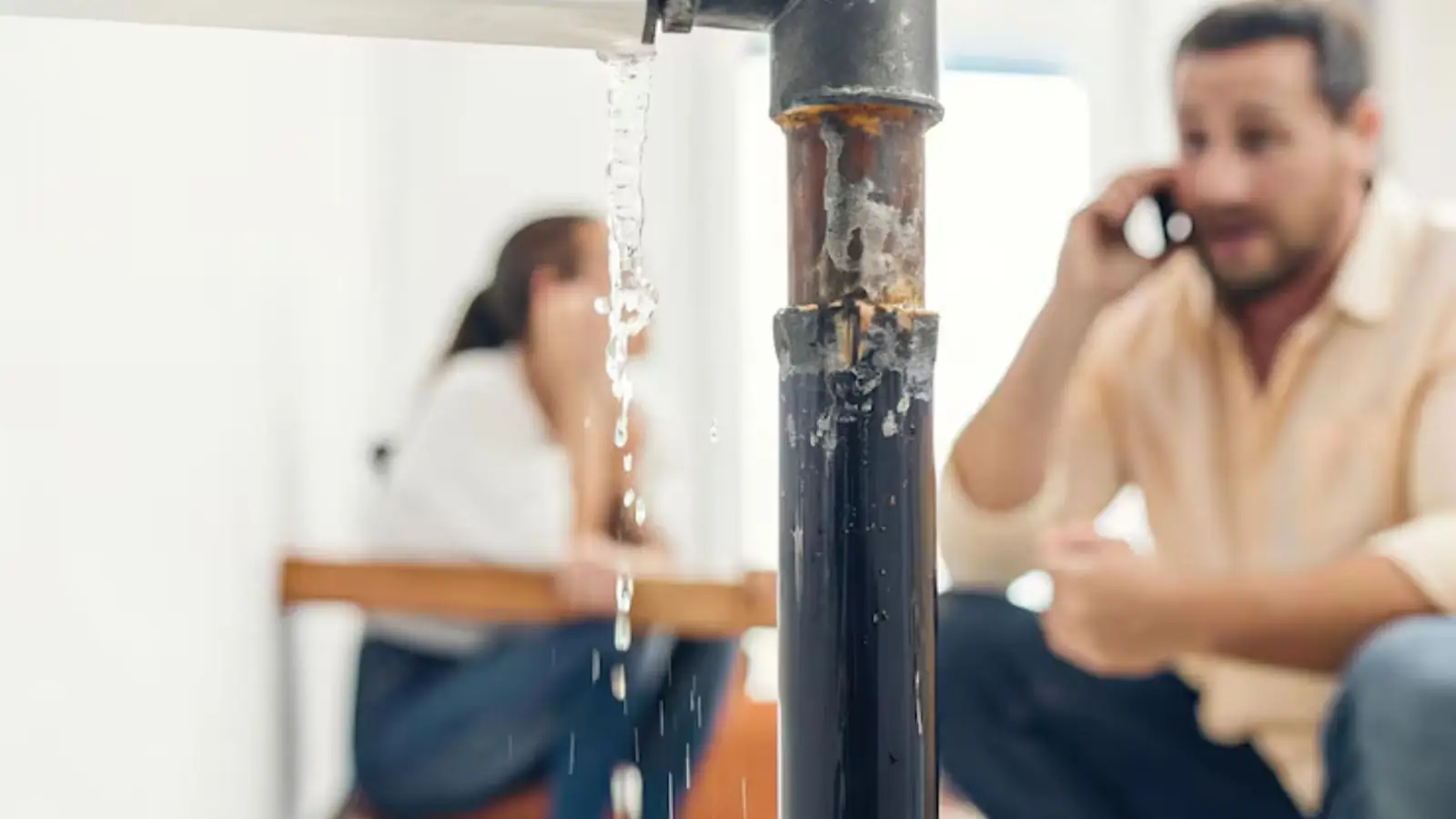
You cannot make an insurer pay, but you can make your claim easy to understand. Stop the water, protect the property, document everything, and call your insurer early. Then give the adjuster clear records of what was damaged and what the repair will take.
Coverage depends on your policy and on how the water got in. Sudden and accidental damage is often covered, gradual leaks and neglect often are not, and flood usually needs its own policy. Check your policy or ask your insurer before you decide what to do about repairs.
Know whether the damage was sudden or gradual
Insurers sort water losses by how they happened. A pipe that bursts, a water heater that fails or a washing machine hose that splits is the sudden kind. A drip behind a tub that rotted the floor over a year is the gradual kind, and many policies treat it as maintenance.
Your own notes help decide which one you have. Write down when you first saw water, what you saw, and when you last saw the area dry. If the cause was hidden inside a wall, say so plainly and let the adjuster and the restoration crew look at it.
Flood is different again. Rising water from outside, like surface water or overflowing ground, is usually excluded from standard homeowner policies. Check the FEMA flood map for your address, and ask your insurer whether you carry separate flood coverage.
Step by step: from the first call to the adjuster visit
- Stop the source if it is safe, and stay out of rooms where water meets electrical equipment or sewage.
- Photograph and video the damage before you move or throw anything out.
- Call your insurer or agent soon, report the loss, and ask what the claim number and next steps are.
- Start drying and protecting the home so the damage does not spread, and keep receipts for every emergency cost.
- Ask the insurer when it can inspect, and make the property available promptly.
- Share the restoration scope of work and photos with the adjuster, then keep a log of every call and email.
Notice that mitigation sits in the middle, not at the end. Most policies expect you to take reasonable steps to prevent more damage once a loss happens. Waiting for approval before you start drying can let a covered loss grow into a larger one.
Safety before paperwork
If water has reached outlets, a panel or an appliance, cut power only if you can reach the panel while dry. Call the utility or 911 for electrical or gas risk before you call the restoration line. Sewage means stay out and let trained crews handle it.
Need help with this today?
Dispatch is open 24 hours a day, every day.
Document the loss the way adjusters expect
The Washington Insurance Commissioner's December 2025 flood guidance letter gives plain advice that fits most water claims. Photograph the damage when it is safe, and take more photos than you think you need. Keep small samples of damaged materials you discard so the adjuster can see them, ask your insurer when it can inspect, and make the property available promptly.
The same letter says insurers have a contractual right to inspect. That means a delay on your side can slow the claim. It also says to remove damaged materials to limit mold, which is why a good record of what you removed matters.
| Document | Why it matters |
|---|---|
| Wide and close-up photos, with video | Show the extent and the source before anything is moved |
| Small samples of removed materials | Let the adjuster see what was damaged after it is gone |
| Moisture readings and a drying log | Show what was wet and when it reached dry standards |
| Written scope of work | Lists rooms, materials and tasks so the adjuster can compare line by line |
| Receipts for emergency costs | Support reimbursement for reasonable steps you took |
| Call log with dates and names | Shows when you reported and what you were told |
| Inventory of damaged belongings | Supports the contents part of the claim |
What the restoration company contributes to your claim
A restoration company does not decide coverage. What it can do is record the loss in detail. That includes the source, the water category, the rooms and materials affected, and the equipment and days needed to dry them.
For the first 24 to 72 hours, water mitigation is the work that stops the damage from spreading. It includes locating the shut-off, starting extraction, setting drying equipment and mapping moisture with meters and thermal cameras. Ask for photos and readings you can pass to the adjuster.
Ask any company whether its crews work to ANSI/IICRC S500, the published standard for water damage, and ask for its Washington L&I contractor registration. Scope and price explained before work starts is the standard you should expect. A written scope is easier for an adjuster to review than a verbal estimate.
After the adjuster visits: scope, supplements and disputes
The adjuster will inspect, review your records and compare them with the policy. Expect questions about the cause, the timeline and the repairs. Answer plainly and send what was asked for.
Sometimes a hidden problem shows up after the first scope. Wet insulation behind a wall, a damaged subfloor or a second leak can mean more work than first noted. Ask the restoration company to document it, and ask your insurer how a supplement to the original claim is requested.
If you disagree with how a claim was handled, ask for the reasons in writing. Compare them with your policy language, and ask your insurer about its review or appeal steps. The Washington Insurance Commissioner's office is the state regulator for questions about insurer conduct.
Repairs after drying
Once materials are dry and approved, rebuild work can start. Water damage repair covers drywall, insulation, flooring, paint and cabinets. Keep your repair scope separate from the drying scope so each part is easy to review.
Homeowners in nearby cities use the same process. If you own a home in Everett or Edmonds, the order is still the same: stop the water, document, notify, dry, then rebuild. For help with drying and a written scope in the Mukilteo area, call (425) 592-3399.
Mukilteo local note: permits for the rebuild
According to the City of Mukilteo's Permit Center page, building, engineering, fire and planning permits go through an online Permit Portal. The Permit Center sits in Planning & Community Development at 11930 Cyrus Way, phone 425-263-8000. Electrical permits are handled by Washington L&I, not the city.
What to do with that: if your rebuild may need a permit, ask the city building department before work starts, and ask your contractor who pulls it. City Hall is open Monday to Thursday and closed Fridays, so plan calls and inspection requests for those days. Building inspections are requested by 3 pm the day before.
Frequently asked questions
As soon as you can do so safely. Many policies expect prompt notice. Report the loss, get a claim number, and ask when an inspection can happen.
No. Most policies expect reasonable steps to prevent more damage. Photograph first, keep samples of what you remove, save receipts, and then begin mitigation.
Often not. Gradual leaks and neglect are commonly excluded, though a sudden break that results from a hidden cause may be treated differently. Check your policy or ask your insurer.
Flood is usually excluded and needs separate flood coverage. Check the FEMA flood map for your address and ask your agent what is available.
Ask for the reasons in writing and compare them with your scope. A supplement request with added photos and readings is one common next step. Ask your insurer how to file it.
It depends on the work. The City of Mukilteo routes building permits through its Permit Portal, and electrical permits go through Washington L&I. Ask the city building department before work begins.
Still have a question? Call (425) 592-3399, any hour.