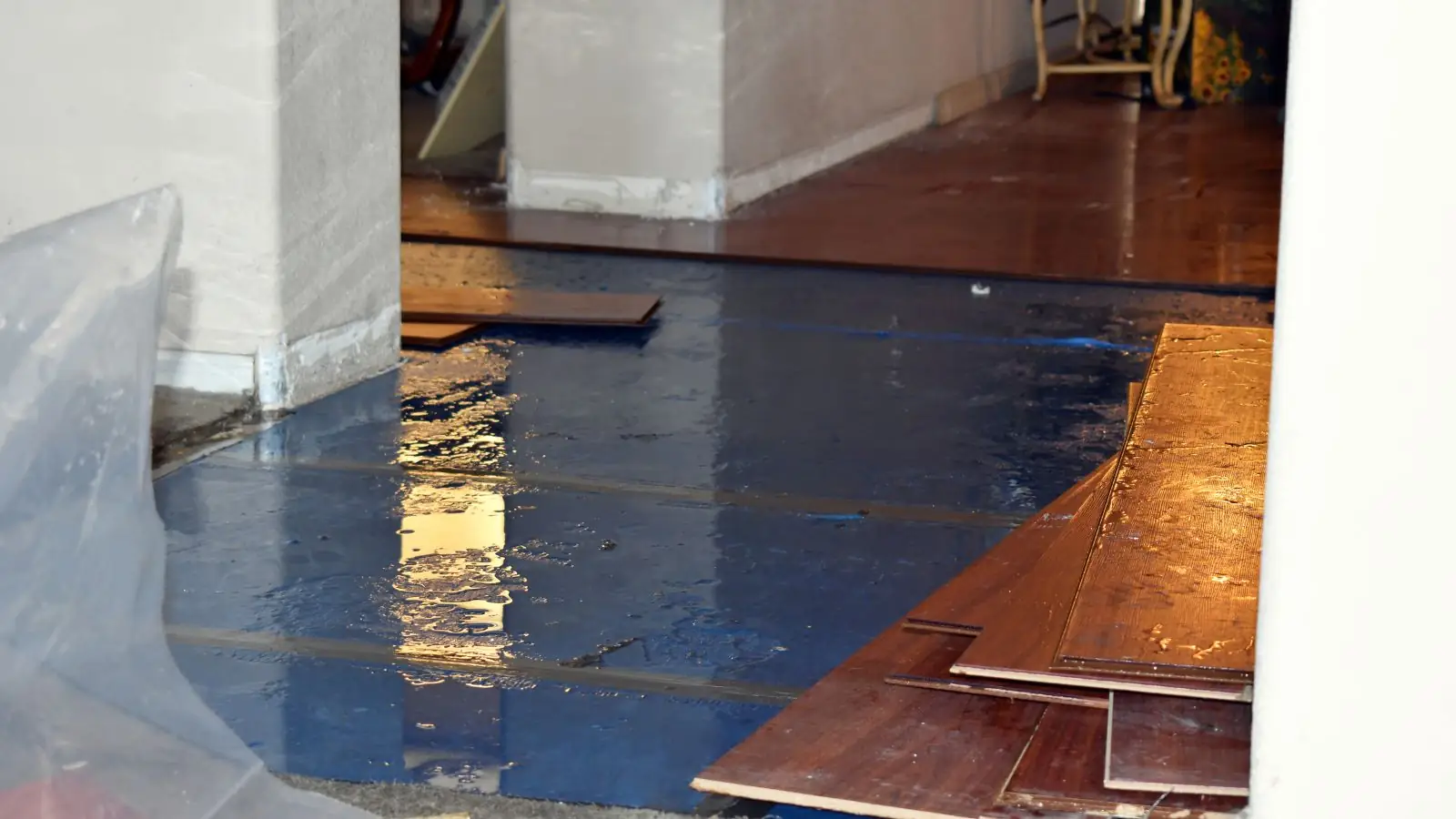
Hardwood that gets wet can often be saved if the water is stopped and the floor is dried quickly. The usual path is to remove standing water, dry the boards and subfloor with controlled equipment, wait until moisture readings are stable, then sand and refinish or replace only what failed. Waiting for the floor to dry on its own usually ends with more boards lost.
Wood is full of tiny channels that pull in moisture. It swells as it drinks and shrinks as it dries, and that movement is what bends and cracks a floor.
Why wet wood swells, cups and crowns
Wood stays stable when its moisture content matches the air around it. When water gets under or onto the boards, the wood takes it up and expands. Because the bottom of a plank usually stays wetter than the top, the edges rise and the board bends.
Cupping is when the edges of a board rise higher than the center, so the board looks like a shallow tray. It usually means moisture is coming from below, or the underside is wetter than the top. Crowning is the reverse: the center rises above the edges. It often shows up after a cupped floor is sanded too early, or after water sat on the surface for a long time.
Buckling is the severe version. Boards lift off the subfloor and may pop loose. By then the damage is rarely small, and a crew will check how far it spreads.
| Symptom | What it means | Usual path |
|---|---|---|
| Edges raised, center low (cupping) | Underside wetter than the top | Dry in place, recheck readings, then sand and refinish |
| Center raised, edges low (crowning) | Surface wet, or a cupped floor sanded too soon | Let the floor settle, confirm stable readings, then sand |
| Boards lifted off the subfloor (buckling) | Heavy swelling, loose or failed attachment | Remove affected boards, dry the subfloor, replace |
| Black or dark staining between boards | Water sat long enough to stain, or mold is present | Assess, remove stained boards, fix the water source |
| Gaps opening after drying | Wood shrank as it dried | Often wait for stable readings before deciding on a fix |
| Soft or spongy feel underfoot | Subfloor is wet or damaged | Open the floor, dry or replace the subfloor, then rebuild |
Why speed matters
The longer wood stays wet, the more it swells and the more likely finish and glue fail. Water that is left to sit also gives mold a start. EPA guidance says to dry water-damaged areas and items within 24 to 48 hours to prevent mold, and mold needs moisture to grow.
If the water just happened, stop the source and soak up what you can with towels or a wet vacuum. Remove rugs and furniture legs from the wet area, and keep shoes off the floor. Then start with water mitigation so extraction and drying begin before the boards go further.
Need help with this today?
Dispatch is open 24 hours a day, every day.
How a crew dries a hardwood floor in place
Drying in place means the boards stay down while moisture is pulled out through a closed system. The crew first maps the wet area with a moisture meter and, in many cases, a thermal camera. These readings show how far water spread under and around the floor.
Next comes the equipment. Special floor drying mats or panels sit on the boards and draw moisture upward, while a hose connection pulls air through them. Dehumidifiers and air movers then take the moisture out of the room, so it does not settle back into the wood.
Sometimes a few boards are removed to open the floor cavity and let air reach the subfloor. That creates a path for the water below to leave. The decision depends on the material, the flooring type and how long it was wet.
A crew then checks readings every day. The goal is to match the moisture content of the wet wood to a dry reference reading from unaffected flooring in the same home. Drying is typically a few days, but it depends on materials and conditions.
When boards must be replaced
Some boards will not return to flat once dry. If a floor is cupped but the readings are now stable, sanding may level it. If boards are split, stained from long contact with water, or crushed at the edges, replacement is the better choice.
Replacement also makes sense when the subfloor underneath has been soaked. A soft or discolored subfloor needs to be dried or replaced before new boards go down. Structural subfloor repair is part of water damage repair, which comes after drying is done.
Solid and engineered hardwood behave differently. Solid wood can often be sanded several times and may recover after a short soak. Engineered boards have a thin top layer glued over a plywood core, so water that reaches the glue line can separate the layers, and the top layer may be too thin to sand again.
Sanding and refinishing after the moisture reading is stable
Do not sand until the floor is dry. Sanding a wet floor can lock moisture in, cause crowning and trap finish over damp wood. A stable reading means the numbers stop dropping and match your dry reference over several checks.
Once readings are stable, the floor can be sanded flat, stained to match where needed, and sealed with new finish. Patching in new boards and blending the stain takes skill, so expect a color difference at first on a stained floor. Ask the refinisher how long the finish needs to cure before you put furniture back.
Slow leaks that damage floors quietly
Not all floor damage comes from a flood. A dishwasher with a failing hose, a washer valve that weeps, or an HVAC condensate line that drips can wet the subfloor for weeks. The first sign is often a slight cup near the appliance.
- Dishwasher: look for dampness at the base of the cabinet and a musty smell nearby.
- Washer valve: check the hose connections and the floor behind the machine.
- HVAC condensate line: look for stains or soft spots near the air handler or drain.
- Refrigerator ice-maker line: pull the unit out and check the floor behind it.
Dishwasher and washing machine discharge is usually Category 2 water under ANSI/IICRC S500, which means it carries significant contamination. That changes cleanup, since porous materials may need to be removed. Our water damage cleanup crews handle that step before drying.
Gradual leaks are often excluded by insurance, while sudden and accidental damage is often covered. Check your policy and ask your insurer. The same drying approach applies to homes in Lynnwood and in neighborhoods across Everett. To talk to a crew, call (425) 592-3399.
Mukilteo local note: damp winters and the Permit Center
Mukilteo has mild, rainy winters and dry summers. That means windows stay shut for months and indoor humidity can climb, which slows drying and can make a cupped floor worse. Run a dehumidifier in the room while you wait for a crew, and ask them what humidity level they are aiming for.
If the subfloor or framing under your hardwood needs structural work, ask the Permit Center before you start. According to the City of Mukilteo's Permit Center page, it sits in Planning & Community Development at 11930 Cyrus Way, phone 425-263-8000, and building permits go through the online Permit Portal. Electrical permits are handled by Washington L&I, and City Hall is closed on Fridays.
Frequently asked questions
Often yes, if the water is stopped and the floor is dried quickly. Floors that have been wet for days, or that have buckled, are harder to save. A moisture reading tells you more than the look of the boards.
Typically a few days, but it depends on materials and conditions. Thick solid planks and wet subfloors take longer than thin boards. A crew checks daily and stops when readings match a dry reference.
Not always. Many cupped floors flatten as they dry. Wait until the moisture reading is stable before sanding, because sanding too early can leave the floor crowned.
Often only the affected boards need replacing. The decision depends on how far the damage spread, whether the subfloor is sound, and how well new boards can blend with old. Ask for the scope and price explained before work starts.
Sudden and accidental damage is often covered, while gradual leaks and neglect often are not. Flood damage is usually excluded and needs separate flood coverage. Check your policy and ask your insurer.
Possibly, depending on the work. Ask the City of Mukilteo Permit Center before you start structural subfloor repairs. The Planning Department can answer how rules apply to your property.
Still have a question? Call (425) 592-3399, any hour.