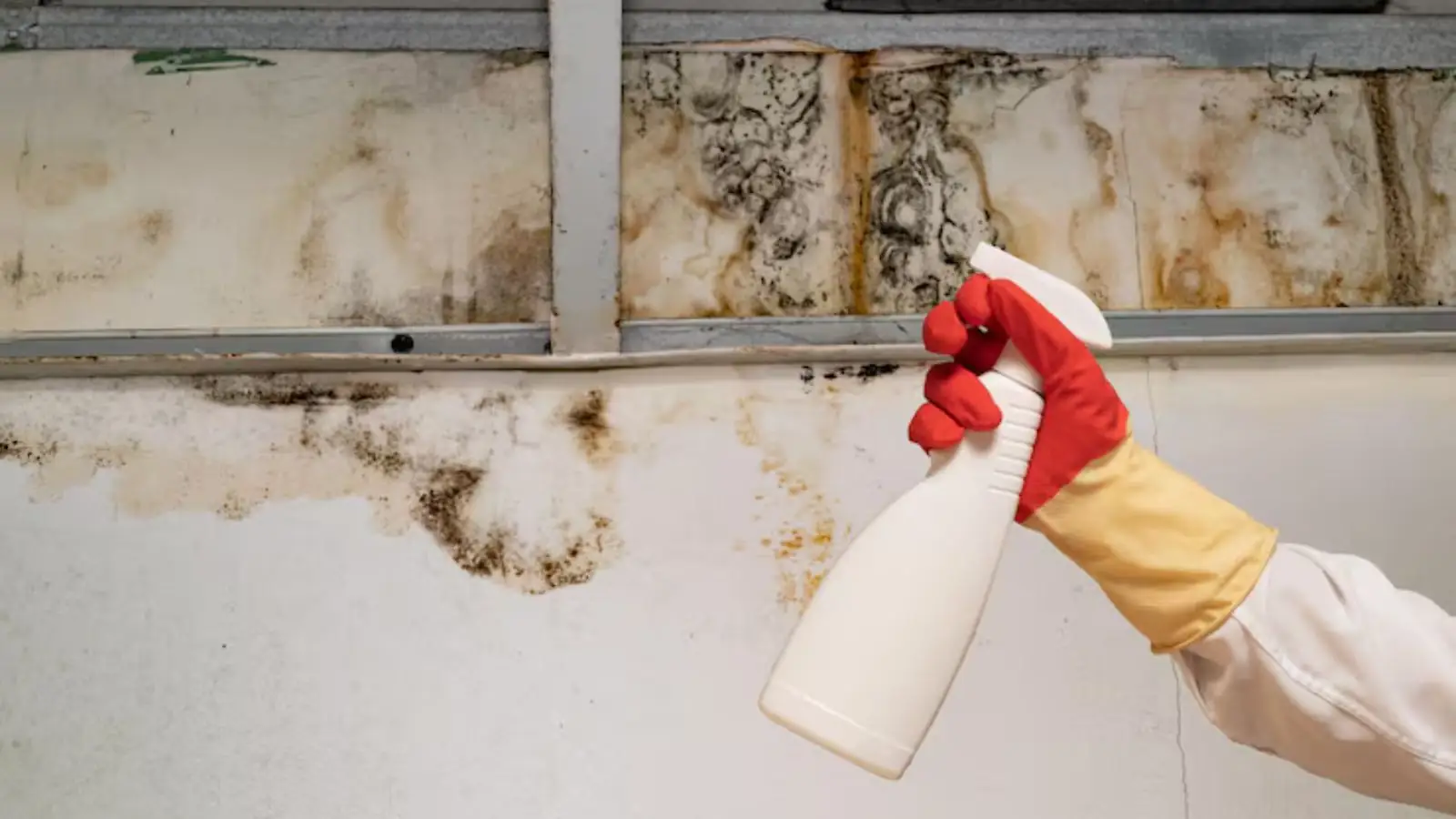
Mold on finished wood, like trim, a table or a painted deck rail, is often a surface problem you can scrub with detergent and water. Wear gloves, goggles and an N-95 respirator, then dry the wood completely. Framing, subfloor and crawl space joists are different, and so is any patch over about 10 square feet. First find out why the wood got wet and fix that.
Finished wood versus framing and subfloor
Sealed or painted wood has a barrier on top. Mold sits on that coating and can usually be wiped or scrubbed off. Raw, unsealed wood is porous, so growth can reach below the surface, and cleaning gets harder.
Framing and subfloor add another problem: you often cannot see all of the affected surface. Joists, sill plates and plywood under flooring may be wet on the back side or hidden by insulation. If you find mold on structural wood, treat it as a moisture investigation first and a cleaning job second.
A screwdriver tells you a lot. Press the tip into the wood. If it sinks in easily or the wood crumbles, the fibers have broken down, and cleaning will not restore them.
Small-area cleanup steps
These steps fit a patch under 10 square feet on solid, sound wood, and the EPA lists this size as a typical do-it-yourself job. Larger areas, sewage-contaminated water or a lot of water damage call for a professional.
- Fix or stop the water source, then run fans or a dehumidifier to start drying.
- Put on gloves, goggles and an N-95 respirator. Keep kids and pets out of the room.
- Open a window if you can, and keep the cleanup area away from vents that spread dust.
- Mix a mild detergent with water and scrub the wood with a stiff brush or rag.
- Wipe the residue off with a clean damp cloth. Do not use a dry brush, which throws spores into the air.
- Dry the wood completely, ideally within a day or two. The EPA advises drying water-damaged items within 24 to 48 hours.
- Bag the rags and brushes, and wash your clothes and hands afterward.
- Check the wood again after a week. If it is still damp, soft or discolored, the job is not finished.
Bleach and ammonia
The EPA does not recommend bleach as a routine mold cleanup method. Never mix bleach with ammonia, since the combination makes dangerous fumes. Do not combine any cleaning products.
Need help with this today?
Dispatch is open 24 hours a day, every day.
Sanding and HEPA vacuuming: why pros contain the area
Sanding can remove a thin layer of stained wood, but it also puts fine dust into the air. That dust can carry mold fragments through the house. Professionals handle this with containment, which means plastic barriers, negative air and air scrubbers fitted with HEPA filtration, plus protective gear for the crew.
After sanding or wire brushing, a HEPA vacuum picks up the fine particles that a regular vacuum would blow back out. A shop vacuum without a HEPA filter is not a substitute. For anything beyond a small, sealed piece of furniture, this is a reason to call for mold remediation rather than improvise in the living space.
Industry practice for mold work follows the ANSI/IICRC S520 standard, which covers containment, removal and verification. You can ask any company whether its crews work to it.
Clean, sand, seal or replace
Use the table as a rough decision guide. Conditions vary, and a moisture meter reading from a professional beats a guess.
| Wood condition | Usual choice | Notes |
|---|---|---|
| Sealed or painted trim with light surface growth | Clean | Detergent and water, dry fully, then touch up the finish |
| Raw wood with shallow staining, dry and solid | Clean, then sand lightly | Sanding is best done by trained crews with containment and HEPA cleanup |
| Solid framing with surface growth and a fixed leak | Clean or professional removal | Depends on size, access and how long it stayed wet |
| Soft, crumbling or spongy wood | Replace | Fibers are damaged, and cleaning will not restore strength |
| Deep dark staining after a long wet period | Often replace | Depends on depth, and a pro can test with a meter and a probe |
| Subfloor that stayed wet under flooring | Often replace | Hidden growth is common, so open and inspect |
If the wood is sound and cleaned, sealing or priming helps it resist new moisture. Sealer is a coating, not a cure, and it does nothing if water keeps reaching the board.
Decks outdoors, joists in the crawl space
Outdoor decks get wet and dry in cycles, and algae, mildew and mold often grow on shaded boards. Sweep debris from the gaps, scrub with detergent and water, rinse, and let the boards dry in the sun. Check that gutters and downspouts are not dumping water onto the deck or the footing.
Crawl spaces are harder. Joists sit in a space with little air movement, and a vapor barrier that has torn or shifted lets ground moisture rise. Look for standing water, wet insulation, soft sill plates and musty air. If you find damp insulation or water on the ground, the issue is a water damage cleanup job as much as a mold one, since wet materials may have to be removed before the framing can dry.
We work with homeowners across Mukilteo and in nearby cities like Lynnwood and Everett. If a crawl space inspection feels unsafe or the area is large, call (425) 592-3399.
Stop the moisture first, then decide
Mold needs moisture, so the plan always starts with the water. Common sources on wood include roof or plumbing leaks, poor drainage near the foundation, a missing vapor barrier, condensation on cold framing and high indoor humidity. Fix the source, then dry the area fully.
Call a professional if the growth is over 10 square feet, if the wood is soft, if the water came from sewage or another contaminated source, or if a lot of water got into the structure. Scope and price explained before work starts. Questions about how mold affects anyone's health belong with a physician.
Mukilteo local note: rainy winters, decks and crawl spaces
Mukilteo has mild, rainy winters and dry summers, so wood outdoors and under the house spends months damp before it can dry. Use the dry months to inspect deck boards, rails and crawl space joists, and clean off surface growth early.
According to the City of Mukilteo's Permit Center page, the city lists stormwater rules in Mukilteo Municipal Code Chapter 13.12, and the Engineering group covers clearing, grading and stormwater. If a drainage fix near a deck or foundation means moving soil, call the Permit Center at 425-263-8000 before you dig. Electrical work for a crawl space light or sump pump goes through Washington L&I, not the city, so ask L&I about permits.
Frequently asked questions
The EPA does not recommend bleach as a routine mold cleanup method. Detergent and water, followed by complete drying, is the baseline. Never mix bleach with ammonia or any other cleaner.
Sanding creates fine dust, and that dust can spread through the house. Professionals sand under containment and clean up with HEPA vacuums. For a small, sealed item, wear an N-95 respirator and goggles and work outdoors, or leave it to a pro.
Health questions belong with a physician.
Soft, crumbling or spongy wood should be replaced, since the fibers are damaged. Deep staining after a long wet period often points the same way. A probe test and a moisture meter reading help settle it.
No. A coating can protect clean, dry wood from new moisture, but it does not remove growth or stop a leak. Clean and dry the wood first, and fix the water source.
The EPA says mold under about 10 square feet, roughly 3 feet by 3 feet, is usually a do-it-yourself project with gloves, goggles and an N-95. Above that size, call a professional.
Start with the City of Mukilteo Permit Center in Planning and Community Development, which handles permits through its online portal. The Planning Department can explain how rules apply to your property.
For electrical work in a crawl space, ask Washington L&I. You can also ask any contractor for its L&I registration.
Still have a question? Call (425) 592-3399, any hour.