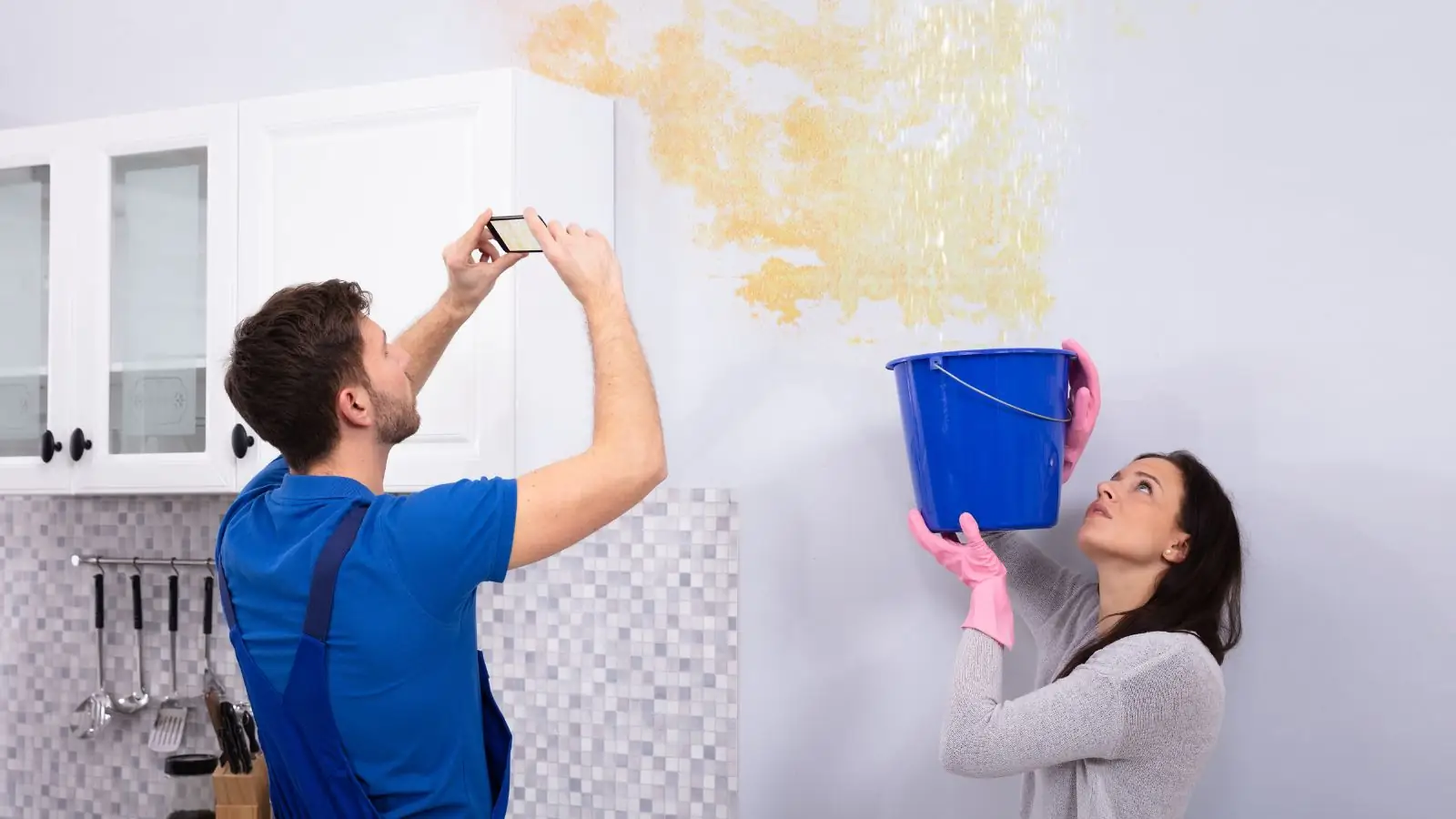
Often, yes, for your things. A renters policy generally covers your belongings when water escapes suddenly and by accident, such as a burst supply line or an overflowing appliance. It usually does not cover the walls, floors and cabinets, because the landlord's policy handles the building.
Slow leaks, neglected repairs and flooding from outside are the common gaps. Every policy words these differently, so check your policy or ask your insurer before you assume anything. The rest of this guide shows how to sort out who pays for what, and what to do in the first day.
What a renters policy usually covers
Most renters policies have three parts. Personal property pays for things you own, like a couch, a laptop or clothes. Liability pays if you cause damage to someone else's property. Additional living expenses may help with a hotel or extra food costs if the unit cannot be lived in after a covered loss.
The trigger matters most. Many policies cover water damage from a sudden and accidental discharge, such as a pipe that bursts inside the wall or a water heater that fails overnight. The same policy may exclude damage that built up over weeks or months.
Limits and deductibles vary a lot. A deductible is the part you pay first, and a limit is the most the policy will pay for a category. Read both before you decide whether a small loss is worth filing.
Who usually handles what
The simplest rule is this: you insure what you own, and the landlord insures the structure. Your lease and your policy can shift that line a little, so treat the table below as a starting point, not a promise.
| Item damaged | Tenant policy | Landlord policy | You or the landlord |
|---|---|---|---|
| Your furniture, clothes, electronics | Often covered if the leak was sudden | Usually not | You file and document |
| Drywall, flooring, cabinets, built-ins | Usually not | Often covered if sudden | Landlord files and repairs |
| Hotel or extra living costs | May help if the unit is unlivable and the loss is covered | May cover lost rent for the landlord | Ask both insurers |
| Leak you caused (overflowing tub) | Liability may apply to damage to other units | Landlord may pursue you | Notify your insurer fast |
| Slow leak under a sink for months | Often excluded | Often excluded | Written notice to the landlord matters |
| Rising water from outside | Usually excluded, needs flood coverage | Usually excluded | Ask your insurer about flood policies |
Need help with this today?
Dispatch is open 24 hours a day, every day.
Leaks that often fall outside coverage
Insurers tend to separate sudden events from gradual ones. A supply line that snaps at 2 a.m. looks different from a drip behind the toilet that stained the subfloor over a season. The second kind is often described as wear, maintenance or neglect, and many policies exclude it.
Flood is its own category. Water that comes in from outside, like surface water or rising groundwater, is usually excluded from standard renters policies and needs separate flood coverage. Sewer or drain backup is another line item that may need an added endorsement, so ask your insurer what yours says.
Water near electricity or sewage
If water is near outlets, a panel or an appliance, stay out and cut power only if you can reach the panel while standing dry. Call the utility or 911 about electrical or gas risk before you call anyone else. If the water may be sewage, keep out of it and do not touch anything it reached.
The first hour: stop it, tell someone, take photos
- Stop the source if it is safe. Close the fixture shut-off valve or the unit's main valve, and if you cannot find it, tell the landlord or property manager right away.
- Tell the landlord or property manager. Do it by phone first if the leak is active, then follow up in writing.
- Photograph and video everything before you move it, including the source, the wet surfaces and every damaged item.
- Move valuables and dry items to a dry spot, but leave heavy damaged materials in place until you have documented them.
- Call your insurer or agent to ask how to open a claim and when an adjuster can inspect.
The more photos the better. The Washington Insurance Commissioner's flood guidance letter from December 2025 advises photographing damage when it is safe and keeping small samples of damaged materials you discard, so the adjuster can see what was lost. That advice applies to renters too, especially for flooring and soft goods.
Your lease, written notice and the landlord
Read the lease sections on repairs, water, and renters insurance. Many leases require tenants to carry a policy and to report leaks promptly. Late reporting can give an insurer or a landlord a reason to argue the damage got worse because of delay.
Send a written notice, even if you already phoned. Email or a letter works, as long as it has the date, the unit number, a short description of the leak and your photos. Keep a copy, and write down every call with a date and a name.
Ask the landlord who will hire the repair crew and when. If the landlord's contractor will handle drying, ask for the schedule. If not, a restoration company can start water mitigation once the landlord authorizes access.
Mitigation duties, receipts and living costs
Most policies expect you to take reasonable steps to prevent more damage after a loss. That can mean shutting off the water, moving belongings, and getting wet materials drying fast. Costs of those steps are often reimbursable if the loss is covered, but ask your insurer before you spend a lot.
Keep every receipt. Fans, towels, storage boxes, a hotel night, laundromat trips and meals out can all matter if your policy has an additional living expenses section. Put them in a folder and note the date and purpose on each.
Wet drywall, carpet pad and insulation can grow mold if they stay damp. The EPA says to dry water-damaged areas and items within 24 to 48 hours, which is why speed matters even in a rental. If the unit is yours to occupy but the structure is the landlord's, tell the landlord exactly how long materials have been wet.
When to call a restoration company
Call when water is standing, when materials stay wet after a day, or when you cannot tell how far it spread. A crew can map moisture inside walls and under floors with meters and thermal cameras. That record helps your adjuster and your landlord understand the full scope.
If standing water is on the floor, emergency water removal comes first. After the source is stopped and water is out, water damage cleanup handles debris, wet materials and sanitizing. Scope and price explained before work starts, and the work should follow ANSI/IICRC S500, the published standard for water damage, so ask any company whether its crews do.
Renters in apartment-heavy towns near Mukilteo often run into the same issues. If you live in Everett or Lynnwood, the steps above are the same: stop the water, notify in writing, document and dry. For immediate help in the Mukilteo area, call (425) 592-3399.
Mukilteo local note: know who runs your water
According to the City of Mukilteo's utilities page, water and sewer service in the city comes from two districts. Mukilteo Water and Wastewater District serves north and central Mukilteo, and Alderwood Water and Wastewater District serves the south Harbour Pointe area. Electric service is Snohomish County PUD and gas is Puget Sound Energy.
Why this matters for a renter: if a leak comes from the supply side before your unit's shut-off, the landlord may need to call the right district. Ask your landlord or property manager which district serves your building, and call the utility first if you smell gas or see water near power.
Frequently asked questions
Often yes for your belongings, if the burst was sudden and accidental. The pipe and the walls are usually the landlord's to repair under the building policy. Check your policy for the exact wording.
Many policies exclude damage from a gradual or long-term leak. Some cover the resulting damage only if the leak itself was hidden and sudden in effect. Ask your insurer how it treats your situation.
Flood is usually excluded from standard renters policies and needs separate flood coverage. Check the FEMA flood map for your address and ask your insurer what flood options exist for renters.
You may be, depending on the cause and your lease. The liability part of a renters policy can help with damage you caused to others. Tell your insurer quickly and keep your photos and notes.
Yes. A dated written notice with photos creates a record of when you reported the leak. Keep a copy for your own file.
If it is electrical or gas, call the utility or 911 first. For water supply questions, the City of Mukilteo says Alderwood Water and Wastewater District serves that area, so ask your landlord which district covers your building. Then call your landlord and your insurer.
Still have a question? Call (425) 592-3399, any hour.