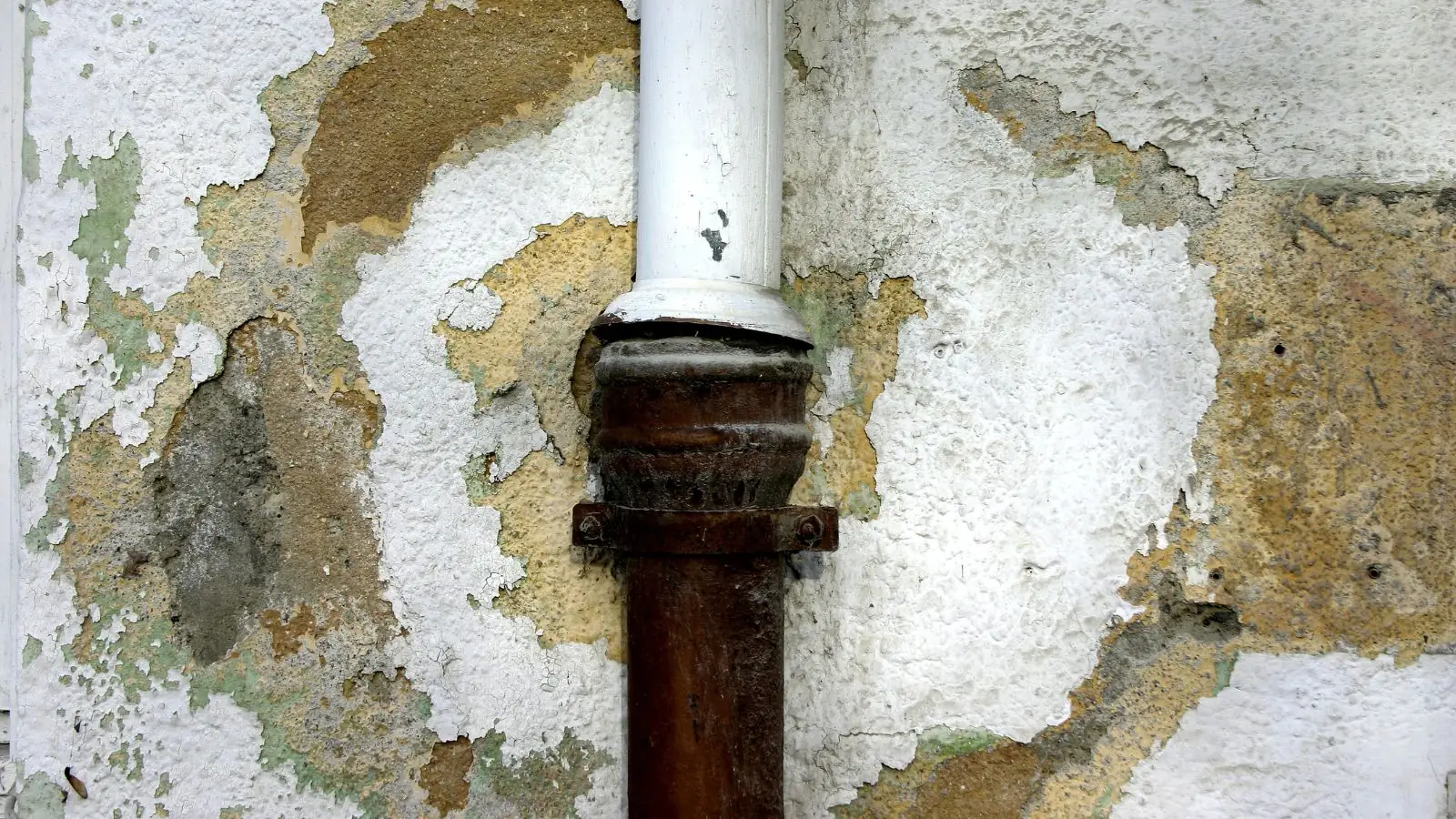
Water damage behind a wall usually shows up as bubbling or peeling paint, baseboards that swell or lift, a musty smell, a wall that feels warm or cool in one patch, or a water bill that climbs with no change in how you live. Any one of these is a reason to check. Two or more together means water is very likely trapped in the cavity.
The fix starts with finding the source and shutting it off. Then a moisture meter, not your eyes, tells you how far the water has spread. The EPA advises drying water-damaged areas within 24 to 48 hours to keep mold from starting, so a hidden leak is worth a same-week look.
Signs that water is inside the wall
Walls hide water well. Drywall is a paper-faced board, and the paint on it can look fine while the gypsum behind the surface turns soft. The first clues are usually small, and they tend to appear low on the wall or near a fixture.
| Sign | Likely cause | First check |
|---|---|---|
| Bubbling or peeling paint | Moisture pushing out from behind the drywall, often a slow supply leak | Press the bubble gently, then look for a fixture or pipe on the other side of the wall |
| Swollen or lifting baseboard | Water wicking up from the bottom plate or flooring edge | Check the nearest sink, toilet, washer or dishwasher, and the floor edge for dampness |
| Musty smell with no visible mold | Wet insulation or drywall paper in a closed cavity | Smell near outlets and baseboards, then ask for a moisture reading of that wall |
| Warm or cool patch on the wall | Hot or cold supply line leaking, or evaporation cooling wet drywall | Feel the surface with your palm and compare it with the wall next to it |
| Water bill rising | A running leak somewhere in the supply system | Turn off all fixtures and see whether your water meter still moves |
| Stain near a window | Siding, flashing or window seal letting rain in | Look outside at the caulk, trim and siding above that window |
Check the meter test first
With every faucet, appliance and ice maker off, watch your water meter for a few minutes. If the dial or leak indicator keeps moving, water is escaping somewhere. Ask your water utility how to read your meter if you are not sure.
Where hidden wall leaks usually start
A supply line inside an exterior wall is a classic culprit. Pinhole leaks in copper or a failed fitting can spray a thin mist for months. Because it is clean water from the supply, it is Category 1 at first, but the longer it sits, the worse the category and the damage get.
Shower and tub valves come next. The valve body sits inside the wall, and a loose connection or cracked fitting leaks only when someone showers. You may see nothing until the wall on the other side of the bathroom starts to stain.
Windows and siding matter more in a wet climate. A failed seal or missing flashing lets rain run behind the exterior wall, then into the framing. Dishwasher and washing machine boxes are the fourth common source, since their hoses and drain connections live inside the wall for years.
- Supply lines in exterior walls and below sinks
- Shower or tub valves and the drain connection below them
- Window, door and siding gaps that let rain in
- Washer outlet boxes and dishwasher supply or drain hoses
- Roof or plumbing vent leaks that run down inside the wall
Need help with this today?
Dispatch is open 24 hours a day, every day.
What happens inside the cavity
Insulation acts like a sponge. Fiberglass batts hold water against the framing and the back of the drywall, and they dry very slowly because the cavity has almost no airflow. Wet insulation also loses most of its insulating value.
The paper facing on drywall is food for mold once it stays damp. Mold needs moisture, so the water source has to be fixed first and the materials dried or removed. If mold is already growing, a professional follows ANSI/IICRC S520 for containment and removal, and any health question belongs with your physician.
How a pro finds the wet spots
A restoration crew starts with a moisture meter. A pin or pinless meter reads how wet the drywall, trim and framing are, and the readings are compared with a dry wall of the same material. The crew marks the wet area and maps it on the wall so progress can be tracked.
A thermal camera adds a second view. Wet materials hold a different temperature than dry ones, so a wet patch can show as a cooler shape. It does not prove water by itself, which is why the meter confirms what the camera suggests.
Sometimes a small inspection opening is the only way to see. A hole about the size of a playing card, cut below the stain or beside a fixture, lets a crew look at the insulation and framing. Done early, it is far less costly than guessing wrong and discovering the damage during a remodel later.
If the leak is active, water mitigation covers the first 24 to 72 hours, including shut-off, moisture mapping and drying setup. Neighbors across the line in Everett and Lynnwood deal with the same hidden supply-line problems, so the steps here apply there too.
Drying through holes or opening the wall
Not every wet wall has to come apart. If the water was clean, the leak was caught early, and the drywall is still firm, a crew may drill small holes along the baseboard or cut a few narrow openings and push dry air into the cavity. This is called drying in place, and it can save the finished surface.
Opening the wall is the better call when insulation is soaked, the drywall is soft or crumbling, or the water was dirty. Washing machine and dishwasher discharge is Category 2 under IICRC S500, and sewage is Category 3. Porous materials in those cases are often removed rather than dried.
Ask the crew which approach it recommends and why, and ask for readings before and after. Drying typically takes a few days, and it depends on materials and conditions. Once the framing reads dry, water damage repair rebuilds the wall with new insulation, drywall, primer and paint.
What to do in the next 24 hours
- Shut off the water at the fixture or the main valve if you can reach it safely.
- Stay away from outlets, switches and panels near wet walls, and call the utility or 911 for any electrical or gas risk before calling a restoration company.
- Photograph the stain, the bubbling paint and any fixtures nearby, because the Washington Insurance Commissioner advises taking plenty of photos when it is safe.
- Move furniture away from the wall and run a fan across the surface, but do not seal the wall with new paint.
- Call a restoration company for moisture readings, and ask your insurer about coverage, since sudden and accidental damage is often covered and gradual leaks often are not.
Mukilteo local note: wet winters and who to ask
Mukilteo, like much of Puget Sound, has mild, rainy winters and dry summers. That means window seals, siding and roof flashing do their hardest work from fall through spring, so check caulk and trim before the rains settle in.
For structural repairs, according to the City of Mukilteo's Permit Center page, building and engineering permits go through the online Permit Portal. The Planning Department answers how rules apply to a specific property, and the Permit Center is at 11930 Cyrus Way. If a repair involves framing, call 425-263-8000 before starting.
The same Permit Center page says electrical permits are handled by Washington L&I, not the city, and that City Hall is closed Fridays. So if a wet wall holds wiring, plan your calls for Monday to Thursday.
Frequently asked questions
The EPA advises drying water-damaged areas within 24 to 48 hours to prevent mold. A closed wall dries slowly, so a slow leak can pass that window without anyone noticing.
If mold is already visible, fix the moisture source first, then follow ANSI/IICRC S520 steps for removal.
Paint hides a stain but does not dry the wall. Water, tannins and mold-food paper stay behind it.
Dry the wall, confirm with a moisture reading, then use a stain-blocking primer.
Not always. A moisture meter and thermal camera can often show the wet area from the surface.
A small inspection opening is used when readings are unclear or the insulation needs a direct look.
Sudden and accidental water damage is often covered, but gradual leaks and neglect often are not. Flood damage is usually excluded and needs separate coverage.
Check your policy and ask your insurer before work begins, and keep photos and small samples of discarded materials.
Ask the city's Permit Center in Planning and Community Development, which handles building permits and questions about rules for a specific property. Electrical work is the exception, since L&I handles those permits.
Also ask any contractor for its Washington L&I registration.
Still have a question? Call (425) 592-3399, any hour.