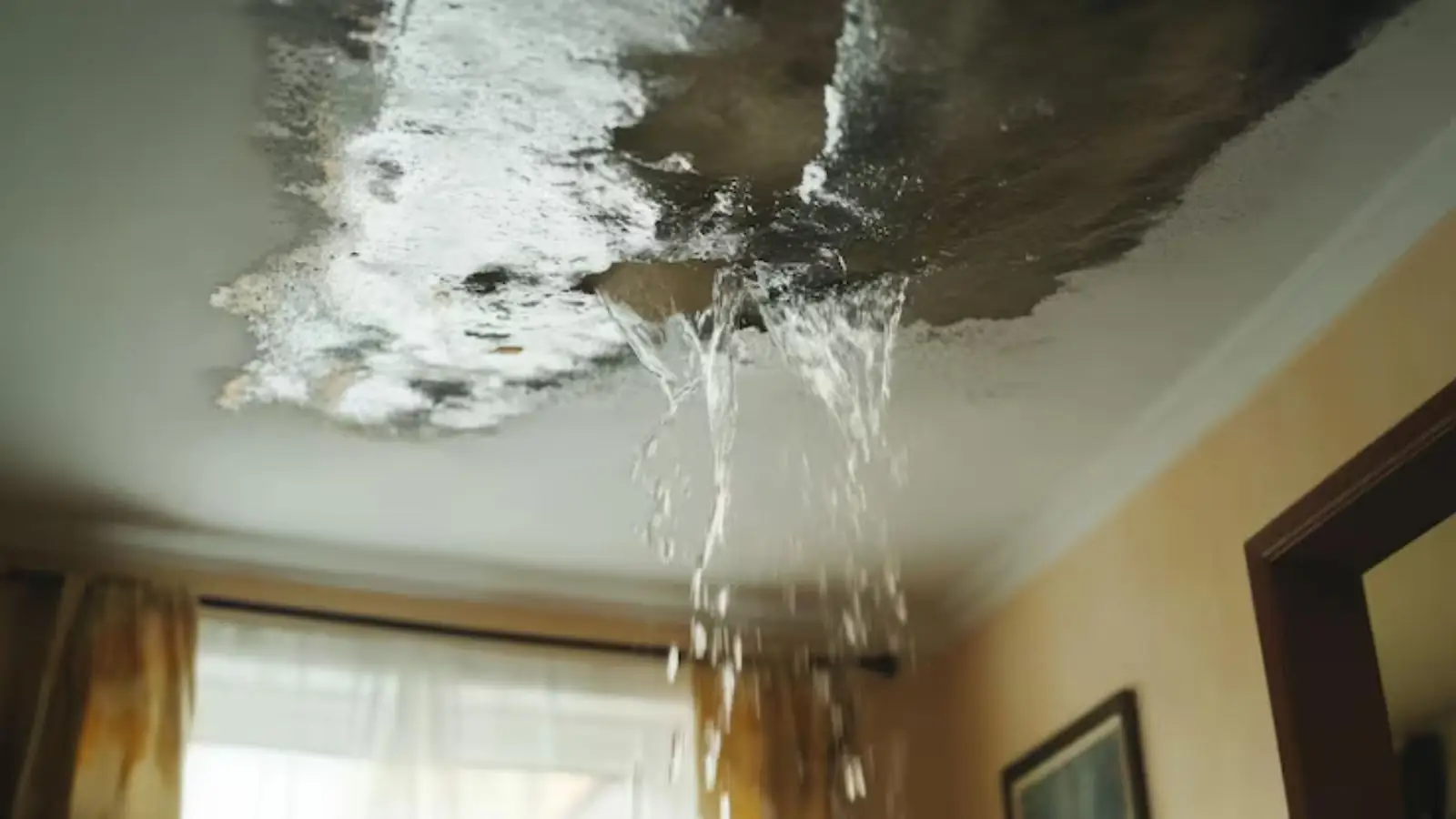
If your ceiling is stained, bulging or dripping, do three things first. Stay out from under it, keep electricity away from the wet area, and work out where the water is coming from. Then move belongings, take photos, and call a restoration crew once the immediate danger is handled.
Drywall acts like a sponge. It can hold a lot of water before it sags, so a small brown stain may hide a large wet area above it. Acting early often decides whether you patch one spot or replace a whole section.
Make the room safe before anything else
The safety rule
Water and electricity do not mix, and a ceiling holds both. Do not stand under a bulging ceiling, and do not touch a light fixture, fan or outlet that is wet or near the wet area.
Cut power to that circuit only if the electrical panel is dry and you can reach it without stepping through water. If you cannot, or if you see sparks or smell burning, leave the room and call 911 or your electric utility before you call anyone else.
A bulging ceiling can let go without warning. A single square yard of soaked drywall can weigh far more than you would guess, and the water above it arrives all at once. Keep children and pets out of the room.
Find the source of the water
Where the stain appears is not always where the water starts. Water travels along joists, pipes and ductwork before it finds a place to drip. Still, the pattern of the damage gives good clues.
Check the room directly above first. A bathroom, laundry room or kitchen upstairs is the most common culprit, and a quick look at the floor, the tub overflow and the shut-off valves under sinks can settle it in minutes. If nothing is above you, look at the roof and attic. Stains that spread after rain point toward the roof, while stains that grow on dry days point toward plumbing or HVAC.
Air conditioning and furnace systems add a third source. A clogged condensate drain line or a cracked drain pan can drip for days before anyone notices. If the stain sits near a ceiling vent or under an attic air handler, shut the system off at the thermostat and look for standing water in the pan.
Need help with this today?
Dispatch is open 24 hours a day, every day.
What you see, likely source, first move
| What you see | Likely source | First move |
|---|---|---|
| Brown ring that keeps growing, no rain | Supply or drain line, upstairs bath or kitchen | Shut off the water at the fixture or the main, then check the floor above |
| Stain that appears or spreads after rain | Roof leak, flashing or attic moisture | Place a bucket, move items, and tarp what you can reach safely |
| Drip or stain near a vent or air handler | HVAC condensate line or drain pan | Turn the system off at the thermostat and check the pan |
| Ceiling bulging and heavy | Trapped water above the drywall | Stay out from under it, protect the floor, and see the next section |
| Dripping from a light fixture | Water inside the fixture housing | Keep clear, cut that circuit only if the panel is dry, call 911 if unsure |
| Musty smell with no visible drip | Slow leak inside the ceiling cavity | Photograph the area and call a crew to check moisture levels |
Relieve a bulge only when it is safe
A ceiling that is bulging with water may be safer to drain in a controlled way than to leave until it collapses. This is a judgment call, and the safe answer is sometimes to leave the room and call for help. Do it only if there is no light fixture or wiring near the bulge, the power to that area is off or the circuit is dead, and you can stand to the side of the bulge.
- Cover the floor with a tarp or plastic sheeting and set a large bucket or a trash can in the middle.
- Put on eye protection, gloves and a hat, and stand beside the bulge rather than under it.
- Poke one small hole at the lowest point of the bulge with a screwdriver, and let the water run into the bucket.
- Add a few more small holes only if the first one drains slowly, and empty the bucket before it fills.
Protect belongings and document the damage
Move furniture, rugs and electronics out of the room, or at least to the dry side. If something is too heavy, slide it away from the drip zone and cover it with plastic. Lift curtains and wall art off the floor as well.
Take photos and a short video before you touch anything else. Show the stain, the bulge, the fixture, and any water on the floor, and take wide shots as well as close ones. The Washington Insurance Commissioner's flood guidance letter from December 2025 advises photographing damage when it is safe and keeping small samples of damaged materials you throw away. Your insurer may want them.
What the water category means for your ceiling
Industry standard ANSI/IICRC S500 sorts water into three categories. Category 1 comes from a clean source, such as a broken supply line or a sink that overflowed with tap water. Category 2 has significant contamination, such as washing machine or dishwasher discharge. Category 3 is grossly contaminated, such as sewage or rising floodwater.
Ceiling water from a supply line starts as Category 1, but it can slip down a category if it sits. Water that has been soaking through insulation, dust and old material for a day or two is no longer as clean as it started. Water from a roof leak or an overflowing toilet upstairs can be more contaminated, and that changes what must be removed.
When to call and what to expect
Call as soon as the area is safe and the water is stopped or contained. For standing water on the floor or a ceiling that is still releasing water, an emergency water removal crew can extract it and set up the next steps. Same-day response when available, and scope and price explained before work starts.
After the first rush, the work moves to water mitigation: opening the ceiling where needed, moisture mapping, and drying the framing so mold does not get started. EPA guidance says to dry water-damaged areas within 24 to 48 hours to prevent mold growth. To reach a crew, call (425) 592-3399.
Our work covers Mukilteo and nearby towns, including crews who regularly head to Everett and to homes around Edmonds. Ask any company whether its work follows ANSI/IICRC S500, and ask for its Washington L&I contractor registration.
Mukilteo local note: who to call about the water supply and the power
According to the City of Mukilteo's utilities page, Mukilteo Water and Wastewater District serves north and central Mukilteo, while Alderwood Water and Wastewater District serves the south Harbour Pointe area. If the leak looks like it comes from the main line or the meter outside rather than from your own pipes, call the district that serves your address. Not sure which one? Check your water bill before you call.
The same city page lists Snohomish County PUD as the electric provider and Puget Sound Energy for gas. If a wet ceiling has knocked out lights or outlets, or you smell gas, call the utility or 911 first and stay out of the room.
Frequently asked questions
Not if it is bulging, dripping or near a light fixture. Stay out from under it and keep children and pets away. If the stain is small, dry and not growing, it is less urgent, but have the source checked.
Cut power to that circuit only if the electrical panel is dry and you can reach it safely. If you cannot, or if you see sparks or smell burning, leave and call 911 or the electric utility.
Painting over a stain hides it but does not dry what is behind it. If the ceiling cavity stays wet, mold can start and the drywall can keep weakening. Find and fix the source, confirm the area is dry, then repair and paint.
Stains that spread after rain suggest the roof, while stains that grow on dry days suggest plumbing or HVAC. Check the room above and the attic. A crew with a moisture meter and thermal camera can often trace it faster.
Sudden and accidental damage is often covered, and gradual leaks often are not. Check your policy and ask your insurer, and photograph everything before cleanup.
It depends on where you live. Mukilteo Water and Wastewater District serves north and central Mukilteo, and Alderwood Water and Wastewater District serves the south Harbour Pointe area. Check your water bill or ask the city if you are not sure.
Still have a question? Call (425) 592-3399, any hour.