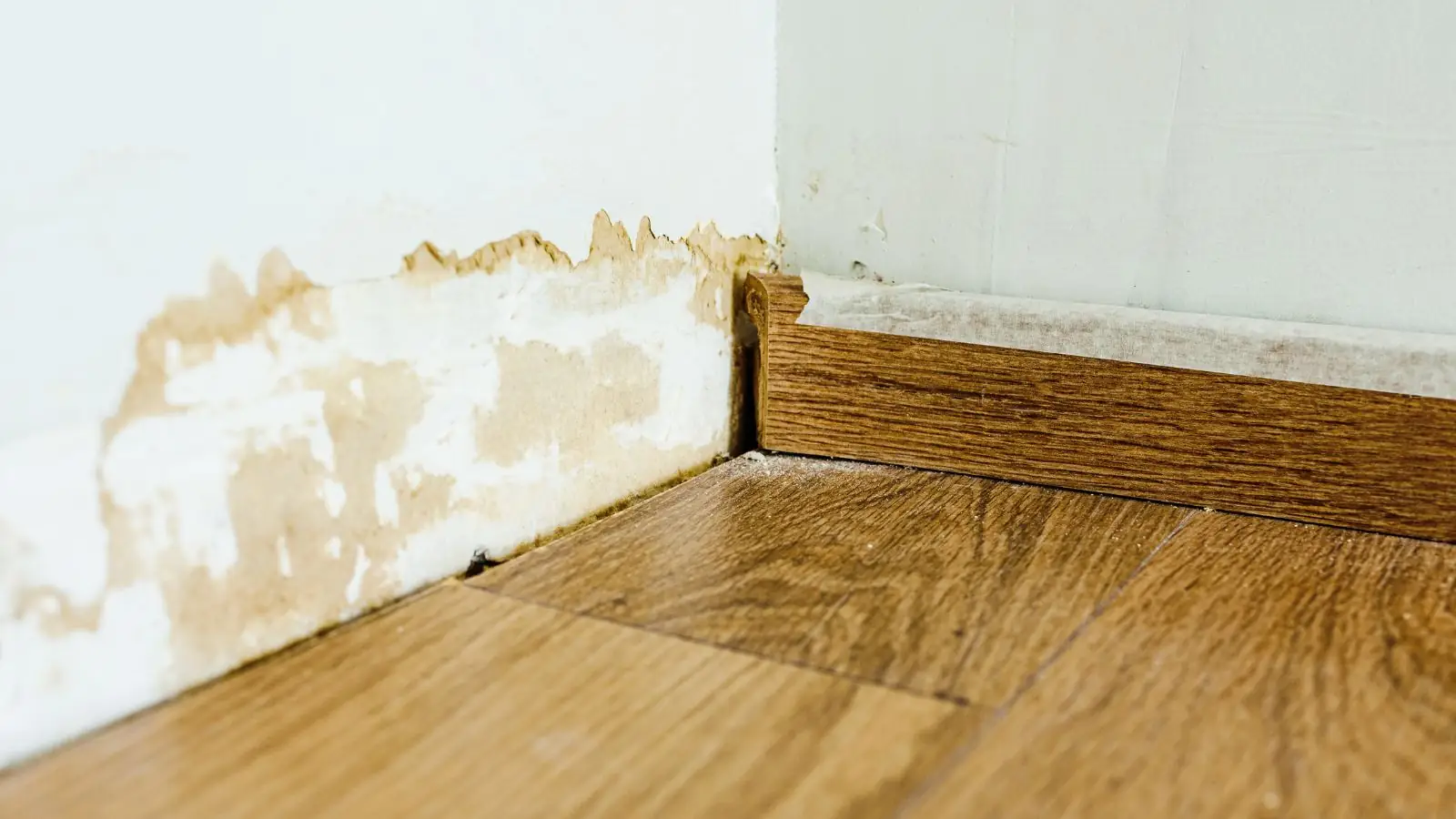
A water damaged wall can be dried in place when the water was clean (Category 1), the drywall is still firm, and it has been wet for a short time, typically a day or two. Cut it out when the water was dirty, the board sags, crumbles or bubbles, or the insulation behind it soaked up water. Those three checks decide most cases.
A moisture meter makes the final call, because a wall can look fine and still read wet. The sections below walk through the categories, the tests, the cut, and the paint steps that follow.
Start with the water category and the clock
The industry standard ANSI/IICRC S500 sorts water into three categories. Category 1 comes from a clean source such as a supply line. Category 2 carries significant contamination, like washing machine or dishwasher discharge. Category 3 is grossly contaminated, including sewage and rising floodwater.
Category matters because porous materials, such as drywall and insulation, soak up whatever the water carries. Clean water can often be dried out of drywall. Contaminated water usually means the board and insulation come out, even if they look fine.
Time matters just as much. The EPA advises drying water-damaged areas within 24 to 48 hours to prevent mold. A wall that has stayed wet for several days, or one that smells musty, is a stronger candidate for removal.
Decision table: condition, usual call
| Condition | Usual call | What it depends on |
|---|---|---|
| Clean water, wet under a day, drywall firm | Dry in place with air movers and a dehumidifier | Meter readings in the board and framing |
| Clean water, wet several days, paint bubbling | Often cut out the lower section | How far the moisture climbed and whether it smells |
| Drywall sagging, soft or crumbling | Cut out and replace | Size of the damaged area |
| Wet insulation behind the wall | Open the wall and replace insulation | Whether it can be dried or has stayed wet |
| Category 2 water (washer or dishwasher discharge) | Usually remove the porous materials | How long it sat and the surface involved |
| Category 3 water (sewage, floodwater) | Remove drywall and insulation, then clean and sanitize | Contamination level and flood height |
| Plaster with firm surface, little staining | May dry in place | Keying to the lath and moisture readings |
| Baseboard swollen or warped | Replace the trim, save only solid wood in good shape | Material type, paint and fasteners |
Treat the table as a starting point and not a verdict. Real jobs mix conditions, and a crew's readings and judgment adjust the call. For floods, groundwater and sewage, flood damage restoration is the service built for Category 2 and 3 situations.
Need help with this today?
Dispatch is open 24 hours a day, every day.
What a flood cut is and when it is used
A flood cut removes drywall from the floor up to a line above where water reached. Crews usually cut a few inches above the visible or metered wet line, often along a straight level mark. The cut opens the cavity so wet insulation, the bottom plate and the studs can be checked and dried.
Wicking is the reason for going above the water line. Drywall pulls moisture upward like a wick, so the wet zone is often higher than the stain. A meter run up the wall shows where the board is dry again.
A flood cut is not always needed. If only the baseboard and a narrow strip are wet and the water was clean, drilling small holes near the bottom and drying through them may be enough. The trade-off is that you cannot see inside, so readings need to be taken after drying.
Plaster, baseboards and other wall types
Plaster behaves differently from drywall. Old plaster over lath can tolerate some wetting, and a firm wall with little staining may dry in place. If it sags, flakes or has lost its grip on the lath, it needs repair or removal, and plaster dust deserves care in older homes, so ask your contractor about testing before any demolition.
Baseboards are the first thing to show damage. Painted MDF swells and rarely returns to shape. Solid wood trim in good condition can often be pulled, dried and reinstalled, which also lets air reach the bottom of the wall.
Cabinets and tile backer boards add their own questions. Particleboard cabinets swell and fall apart, while tile may stay but need the backer checked. For clean-water jobs, drying first and then deciding on materials is the sensible order.
The repair sequence, from wet to painted
- Stop the water and document the damage with photos and small samples of discarded material.
- Dry the wall and framing, then confirm with moisture readings before anything is closed.
- Remove materials that cannot be dried, including wet insulation.
- Install new insulation, hang drywall, tape and finish the seams.
- Prime the repair and the old stained area with a stain-blocking primer.
- Paint the whole wall, corner to corner, so the finish matches.
Closing the wall before it is dry is the most common mistake. Trapped moisture feeds mold on the back of the board. Once the framing reads dry, water damage repair covers the rebuild from drywall to paint.
Primer and paint that actually block stains
Ordinary wall paint will not hold back a water stain, and it often bleeds through within days. Use a stain-blocking primer made for water stains. Oil-based and shellac-based primers are the classic choices, and some water-based stain blockers now do a similar job.
Read the label for ventilation needs, because oil and shellac primers have strong fumes. Prime the patch plus a margin of old surface. Let it dry fully, then paint two coats of finish to avoid flashing, where a patch shines differently from the rest.
Mold is a separate matter. The key to mold control is moisture control, and bleach is not recommended by the EPA as a routine cleanup method. If mold covers more than about 10 square feet, call a professional who follows ANSI/IICRC S520.
What to ask a contractor before work begins
- Do your crews work to ANSI/IICRC S500, and will you share moisture readings before and after drying?
- What is your Washington L&I contractor registration?
- Is the scope and price explained before work starts, and in writing?
- Which materials come out, and why those?
- Who handles permits if framing or wiring is involved?
What to do before a crew can look at a wet wall
- Do not poke holes in a bulging wall, because trapped water can come out all at once.
- Turn off power to the room at the breaker only if the panel is dry and easy to reach.
- Move furniture away from the wall and pull baseboards only if a crew tells you to.
- Photograph the stain and the damage so the loss is documented.
If you are weighing a repair after a quick leak, water mitigation shows what early drying setup looks like. Homeowners in Edmonds and Everett often compare quotes, so ask each company to explain the scope in the same terms.
Mukilteo local note: permits and who to call
According to the City of Mukilteo's Permit Center page, building, engineering, fire and planning permits go through the online Permit Portal. The Planning Department answers how rules apply to a specific property, so call 425-263-8000 before opening a structural wall.
The same page states that electrical permits are handled by Washington L&I and not the city. If a wet wall has outlets or wiring that need replacement, ask your electrician about the L&I permit, and remember that building inspections are requested by 3 pm the day before and run Monday to Thursday.
Frequently asked questions
Sometimes. Firm drywall that got clean water and was dried within about a day or two can often be saved.
Sagging, crumbling or contaminated drywall is usually removed.
Usually a few inches above the highest wet reading, which is often higher than the visible stain.
A meter run up the wall helps pick the line.
Often yes when it has soaked up water, since it dries slowly in a closed cavity. It depends on the type and how long it stayed wet.
Insulation from Category 2 or 3 water is usually removed.
Not by itself. Use a stain-blocking primer first, once the wall reads dry.
Two coats of finish paint then help the patch blend in.
Sudden and accidental damage is often covered, but gradual leaks and neglect often are not, and flood is usually excluded. Check your policy or ask your insurer.
Take photos and keep small samples of what you discard for the adjuster.
The city's Permit Center handles building permits. Electrical permits are handled by Washington L&I, not the city.
Ask the Planning Department how rules apply to your specific property.
Still have a question? Call (425) 592-3399, any hour.