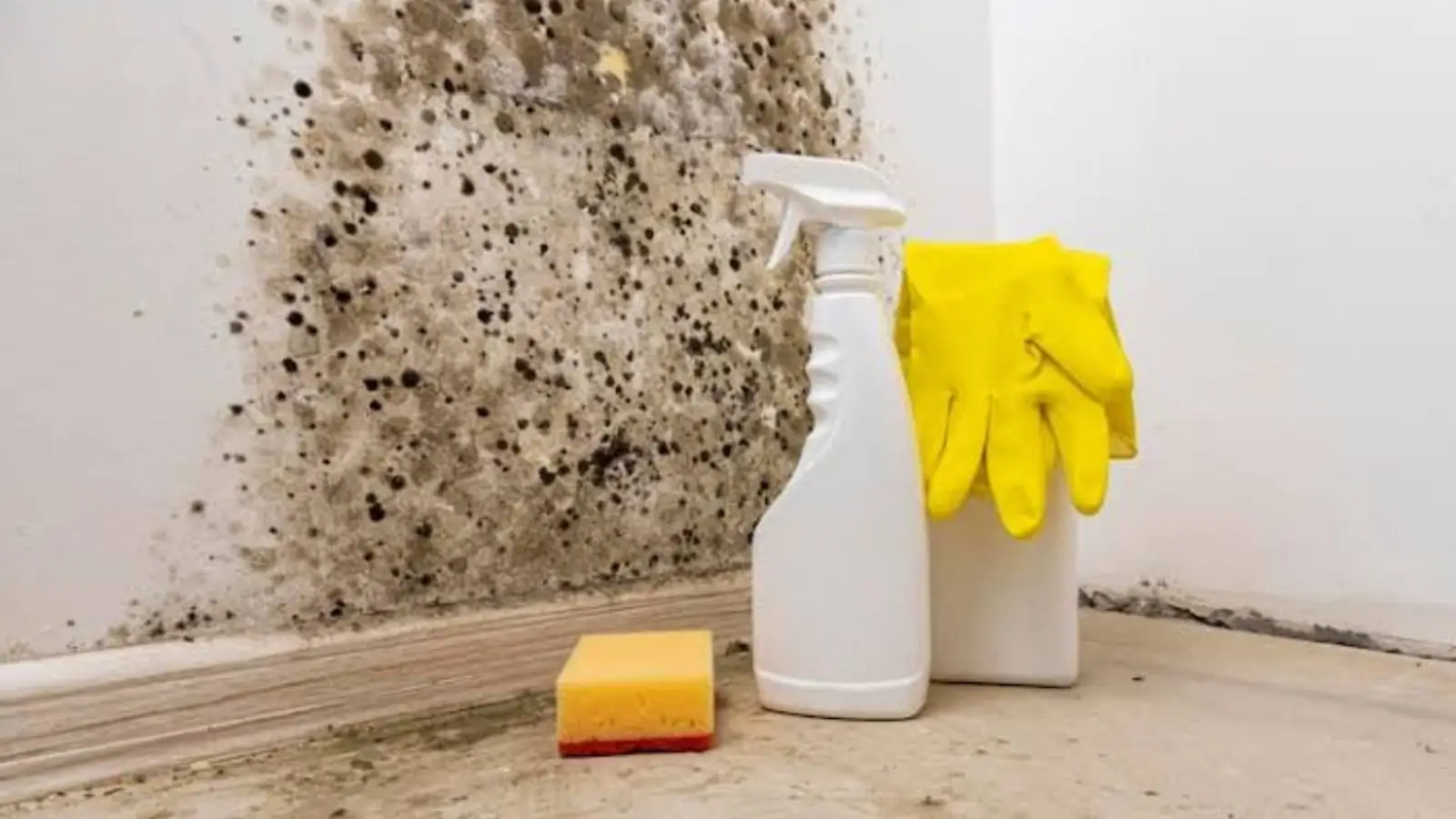
The honest answer is that killing mold is not the main goal. The EPA says the key to mold control is moisture control, and it does not recommend biocides as a routine step. What works is fixing the water source, physically removing the growth with detergent and water, and drying everything fast. Dead mold can still be left behind on a surface, so cleaning and removal come first.
Why the question is a bit off
Most people ask what kills mold because they want the stain and the smell gone. A product that only kills what is on the surface leaves the cause in place. If the wall or floor stays damp, new growth can start again, whatever you sprayed on it.
The CDC says you do not need to know the type of mold in your home, so there is no special product for black mold. The steps are the same for any color. Fix the moisture, remove the growth, dry the area, and replace what cannot be cleaned.
What homeowners commonly use, and the cautions
The EPA's baseline for hard surfaces is detergent and water. Scrub the surface, rinse or wipe it off, and dry it completely. This works because it lifts mold off the material instead of just treating it.
Bleach comes up constantly, and the EPA says it is not recommended as a routine cleanup method. If you use any household product, read the label and ventilate the room. Never mix bleach with ammonia, and never combine cleaning products of any kind. Washington's Insurance Commissioner gives the same warning in its flood guidance.
You will also hear about vinegar, essential oils and other home remedies. These claims are not backed by the EPA guidance, so this guide does not endorse them. The EPA's baseline is detergent and water, and that is the place to start.
Protect yourself while you clean
Wear gloves, goggles and an N-95 respirator, and keep the area ventilated. Keep children and pets out of the room. Questions about how mold affects someone's health belong with a physician.
Need help with this today?
Dispatch is open 24 hours a day, every day.
Why dead mold still has to come out
Mold that has died or been sprayed does not vanish. The residue stays on the surface and in the material. A stain-blocking primer or a coat of paint will hide it, but it does not remove it, and moisture trapped underneath can keep damaging drywall and wood.
That is why the process is called remediation instead of treatment. The goal is to take the growth off, discard what cannot be cleaned, and dry the structure. When wet drywall or insulation has stayed damp, it is often removed rather than dried in place, though that depends on the material and how long it stayed wet.
Porous materials: when to throw it away
Mold can grow into porous materials, and scrubbing cannot reach what is inside. The EPA says porous items like ceiling tiles and carpet may have to be thrown away if they are moldy. Hard, non-porous surfaces such as tile, glass and sealed metal are far easier to clean.
| Common belief | What to do instead | Why |
|---|---|---|
| Spray it with bleach and it is gone | Scrub with detergent and water, then dry completely | The EPA does not recommend bleach as routine, and it does not fix moisture |
| Paint over it with mold-resistant paint | Remove the growth, fix the leak, then repaint | Paint hides the mark but not the water or the material underneath |
| Black mold is a special case that needs a special product | Use the same steps for any color | The CDC says you do not need to know the type |
| Mix two cleaners for extra strength | Use one product at a time and never mix | Bleach and ammonia must never be combined |
| A mold test tells me what to do | Fix the moisture and look at the size | The EPA says sampling is usually unnecessary when mold is visible |
| Soaked carpet or ceiling tile can be saved | Plan to discard moldy porous items | The EPA says porous materials may have to be thrown away |
Containment, HEPA filtration and when to call a pro
Cleaning a small area is one thing. Disturbing a large patch is another, because scrubbing and demolition throw spores and dust into the air. For anything above about 10 square feet, after a lot of water damage, or when the water was sewage or otherwise contaminated, the EPA says to call a professional.
Professionals use containment, negative air and air scrubbers with HEPA filtration to keep the work from spreading through the house. Mold remediation done to the ANSI/IICRC S520 standard follows a written plan, and you can ask any company whether its crews work to it. If the mold came from a sudden leak or a flood, the same team often needs to handle drying through water mitigation so the moisture is gone for real.
Dehumidifiers and everyday humidity control
Humidity does the slow work in many homes. A dehumidifier can help keep a basement, crawl space entry or closed-up room from staying damp, and it should be emptied or drained as the manufacturer directs. Place it where air can circulate, and keep doors open so it treats the whole area.
- Run bath and kitchen fans during use and for a while afterward, and confirm they vent outside.
- Fix drips, sweating pipes and roof or window leaks as soon as you find them.
- Dry wet towels, rugs and clothes instead of leaving them in a pile.
- Keep gutters clear and soil sloping away from the foundation.
- Watch for window condensation, which signals indoor air that is too humid.
If you are not sure whether a damp area is drying, a pro with a moisture meter and thermal camera can map it. We serve homeowners in Mukilteo and in nearby towns such as Edmonds and Lynnwood. Call (425) 592-3399 to talk through what you are seeing.
Mukilteo local note: humidity in a wet winter
Mukilteo has mild, rainy winters and dry summers. Windows stay shut for months, clothes dry indoors, and showers run in rooms with weak fans, so indoor humidity builds up. Use the wet months to check fan ducts, dehumidifier drains and any damp corners.
According to the EPA's mold guidance, wet areas should be dried within 24 to 48 hours to prevent mold. The City of Mukilteo's utilities page lists Mukilteo Water and Wastewater District for north and central Mukilteo and Alderwood Water and Wastewater District for the south Harbour Pointe area. If you suspect a leak on the supply side, ask your water utility which district serves your address.
Frequently asked questions
The EPA does not recommend bleach as a routine mold cleanup method. Use detergent and water as the baseline, dry the surface completely, and never mix bleach with ammonia.
Vinegar and other home remedies are not part of the EPA baseline, so we do not endorse them. Detergent and water, followed by thorough drying, is the EPA's starting point.
Whatever you use, never combine products.
Paint covers the look but leaves residue and the moisture behind. Remove the growth, fix the water source, dry the area, and only then repaint.
Porous items such as ceiling tiles and carpet may need to be discarded if they are moldy. Drywall and insulation that stayed wet are often removed, depending on the material and how long it stayed wet.
No. The CDC says you do not need to know the type, and the EPA says sampling is usually unnecessary when mold is visible. The steps depend on the size of the area and the moisture source.
Health concerns belong with a physician.
Run bath fans, fix leaks promptly, keep gutters clear, and use a dehumidifier in damp rooms. Dry wet items within 24 to 48 hours, as the EPA advises.
If a space stays damp despite those steps, have a pro map the moisture.
Still have a question? Call (425) 592-3399, any hour.